
How Evaporative Air Conditioning Works
Evaporative air conditioning works by harnessing a simple natural process: water absorbs heat as it evaporates. The unit draws warm outside air through thick, water-saturated pads. As the air passes through those wet pads, the water evaporates and pulls heat out of the air, dropping the temperature by anywhere from 6 to 12 degrees Celsius before the cooled air is pushed into your home.
The key component is the cooling pad, sometimes called a 'filter pad' or 'evaporative media'. A small pump continuously circulates water over these pads, keeping them saturated. A fan then draws outside air through the pads and into the duct system or directly into the room.
This is a fundamentally different process to refrigerative air conditioning. A refrigerative system uses a compressor and refrigerant to extract heat from indoor air in a closed loop. Evaporative cooling does not use refrigerant at all. It simply moves outside air through water, which means it works best when that outside air is hot and dry. The drier the air, the more effectively water evaporates and the greater the cooling effect.
Because evaporative systems constantly bring in fresh outside air rather than recirculating indoor air, they also provide continuous ventilation. Many homeowners find the air quality noticeably fresher compared to a sealed refrigerative system.
Key takeaways
- Evaporative air conditioning how it works relies on water evaporation to cool incoming outside air by 6 to 12 degrees Celsius.
- It works best in hot, dry climates and loses effectiveness as humidity rises.
- The system requires open windows and provides fresh air circulation, unlike sealed refrigerative systems.
The Main Types of Evaporative Coolers
Australians shopping for evaporative cooling will generally come across two formats: ducted whole-home systems and smaller portable or window units. Ducted evaporative is by far the most common residential setup in drier Australian climates, particularly across Melbourne, Perth and regional areas of Victoria, South Australia and Western Australia. This article focuses primarily on ducted systems, as that is what most homeowners are researching when they start comparing evaporative cooling options.
Ducted Evaporative Systems
A ducted evaporative system sits on your roof and connects to ceiling vents throughout the home via a network of ducts. The roof-mounted unit pumps water over the cooling pads, draws in outside air, cools it as it passes through the saturated media, and then a fan pushes that cooled air down through the ducts and out through ceiling outlets in each room.
Because the system is constantly introducing fresh outside air, it needs somewhere for that air to escape. Windows or doors must be left slightly open while the system runs. This is not a flaw; it is how the airflow is designed to work. Without an exit point, the air pressure builds up and the cooling effect drops off significantly. A ducted system can typically cover an entire home, making it the practical choice for families who want whole-house comfort rather than cooling a single room.
Portable and Window Evaporative Coolers
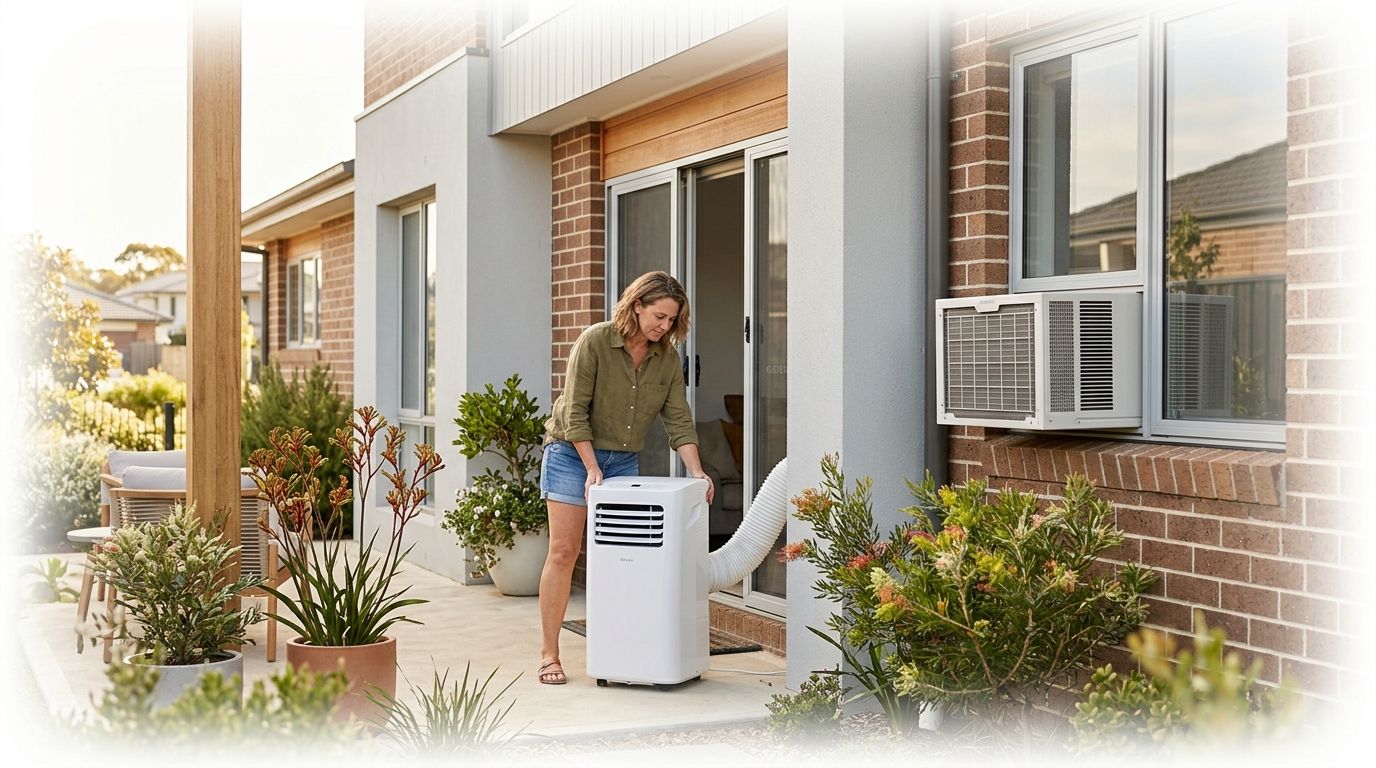
Portable and window evaporative coolers are self-contained units that require no installation. You fill the water tank, plug them in and point them where you need cooling. They are a practical option for renters, for cooling a single room or as a supplement to an existing system. The trade-off is coverage: these units are only effective in the immediate area and lose effectiveness quickly as humidity rises. If you live in a coastal or humid climate, a portable evaporative cooler will struggle on the days you need it most.

Pros and Cons of Evaporative Cooling for Australian Homes
Evaporative cooling has real strengths in the right climate, but it also has genuine limitations that can make it the wrong choice for many Australian households. Here is an honest breakdown of both sides so you can weigh them up against your own situation.
The Pros
- Significantly lower running costs. A ducted evaporative system typically draws 200 to 500 watts of power. A reverse cycle split system uses 1,000 to 3,500 watts for the same job. Over a long summer, that difference adds up to a substantial saving on your electricity bill.
- Lower purchase and installation cost. Evaporative systems are generally cheaper to buy and install than a comparable ducted refrigerative system, making the upfront investment more accessible for many households.
- Fresh outside air, not recirculated air. Because the system constantly draws in air from outside, you get continuous ventilation. Many people notice the air feels noticeably fresher compared to a sealed refrigerative system running in recirculation mode.
- No refrigerants. Evaporative cooling uses only water and electricity. There are no refrigerant gases involved, which removes the risk of refrigerant leaks and simplifies servicing.
- Well suited to dry inland climates. If you live in inland Victoria, Perth, Adelaide, the ACT or the drier parts of NSW, evaporative cooling performs extremely well through the hottest months of the year.
The Cons
- Ineffective in humid conditions. This is the big one. Evaporative cooling relies on dry air to work. In coastal Queensland, coastal NSW and anywhere that experiences humid summers, the system loses most of its cooling effect on the days you need it most.
- Windows and doors must stay open. The system needs an exit point for the air it pushes in. That means leaving windows or doors ajar while it runs, which raises legitimate concerns about security, street noise and insects.
- No heating. Evaporative coolers do one job: cooling. If you want year-round climate control, you will need a separate heating solution alongside it.
- Adds moisture to the air. On days when humidity is already creeping up, the extra moisture introduced by the system can make the air feel muggy and uncomfortable rather than refreshing.
- Pads require regular maintenance. The cooling pads need to be cleaned during the season and replaced periodically. At the end of summer, the system should be properly shut down and the pads dried out to prevent mould and mineral build-up.
If you want a detailed side-by-side breakdown of how these two technologies stack up on cost, comfort and climate suitability, the evaporative cooling vs air conditioning guide covers that comparison in full.
Is Evaporative Cooling Right for Your Home?
Evaporative cooling is an excellent choice for dry-climate Australian homeowners who want low running costs and fresh air circulation, but it is the wrong fit for humid coastal regions or anyone who needs year-round heating and cooling. Work through the questions below to figure out which side of that line you fall on.
- Where in Australia do you live? If you are in Perth, Adelaide, inland Victoria, the ACT or the drier parts of NSW, evaporative cooling will perform well through summer. If you are in coastal Queensland, coastal NSW or anywhere that experiences humid summers, a refrigerative system will serve you far better.
- Do you need heating as well as cooling? Evaporative systems only cool. If you want one system to handle both summer and winter, a reverse cycle split system or ducted refrigerative system is the only option that covers both.
- Are you comfortable leaving windows open while the system runs? This is a practical question worth thinking through honestly. If you have security concerns, young children, pets that escape, or you live on a noisy street, the requirement to keep windows ajar may be a real drawback.
- Is upfront cost or long-term running cost more important to you? Evaporative systems win on both counts in most cases, but the gap is narrower than many people expect. For a detailed breakdown of purchase prices, installation costs and ongoing running costs, the evaporative cooling cost guide has the numbers laid out clearly.
- Do you rent or own? Renters generally cannot install a ducted system without landlord approval. A portable evaporative cooler is a low-commitment option, but its limitations are significant. Homeowners have the full range of options available.
If you have worked through those questions and evaporative cooling does not fit your situation, a reverse cycle split system is the most practical alternative for the majority of Australian homes. The Daikin 3.5kW Lite ($1,206) is a solid entry-level option, the Daikin 3.5kW Cora ($1,287) adds a more refined feature set, and the Daikin 3.5kW Alira X ($1,447) steps up to built-in WiFi for app-based control. All three provide both heating and cooling, work effectively in any climate and require no open windows to operate. Browse the full range of split system air conditioners if you want to compare models and pricing across brands.
Maintenance: What Owning an Evaporative Cooler Actually Involves
Evaporative cooler maintenance follows a clear seasonal rhythm: a start-up routine before summer, light checks during the season, and a proper shutdown once the heat is done. None of it is technically difficult, but skipping steps, particularly pad care, is the single most common reason evaporative systems underperform or start producing musty odours.
Seasonal Start-Up (Before Summer)
- Clean the unit. Remove any debris, dust or bird nesting material that has accumulated on the roof unit over winter. Wipe down the interior housing.
- Inspect or replace the cooling pads. Check the pads for mineral scale, mould or physical deterioration. Pads that are heavily scaled or crumbling should be replaced before the season starts. Lightly scaled pads can often be cleaned with a diluted vinegar solution.
- Check the water pump. Run the pump briefly and confirm water is circulating evenly over all pads. A pump that is not distributing water properly will leave dry patches on the pads and reduce cooling performance significantly.
- Test the float valve. The float valve controls the water level in the reservoir. Confirm it shuts off correctly at the right level and is not sticking open or closed.
Mid-Season Upkeep
- Check the pads every three to four weeks. In areas with hard water, mineral scale builds up quickly on the pads. A light rinse or wipe-down keeps airflow unrestricted and prevents the musty smell that comes from mould growth on damp, scaled media.
- Top up the water supply. Most ducted systems connect directly to mains water, so this is rarely an issue. Portable units with manual tanks need regular refilling, especially on hot days when evaporation rates are high.
End-of-Season Shutdown (After Summer)
- Drain the water tank completely. Standing water left in the reservoir over winter becomes a breeding ground for bacteria and algae. Drain it fully and leave the drain plug out until next season.
- Remove and dry the pads. Pads left wet over winter will develop mould. Either remove them for storage or run the fan-only mode for a period to dry them out before closing the unit down.
- Cover the unit or close the ceiling vent. A roof-mounted unit left open over winter acts as a direct cold draught into your home. Fit a cover over the roof unit or close the ceiling vent damper to keep the warmth in during the cooler months.
The whole routine takes a couple of hours at the start and end of the season, with a quick pad check every few weeks in between. Stay on top of it and your system will cool efficiently and smell fresh all summer.
Ready to Choose Your Cooling System?
Evaporative air conditioning is a genuinely efficient and cost-effective cooling solution for the right home in the right climate. If you live in a dry inland area, are comfortable leaving windows open while the system runs, and only need cooling rather than year-round climate control, it is hard to beat on running costs and upfront price.
If you are in a humid coastal region, need heating as well as cooling, or want a system that works with the windows closed, a refrigerative system will serve you better. For a full breakdown of what evaporative cooling costs to buy, install and run, the evaporative cooling cost guide has the numbers laid out clearly.
For readers leaning toward a refrigerative system, browse our range of split system air conditioners to compare models and pricing across brands. And if you want to understand how reverse cycle technology works before you commit, the article on what is reverse cycle air conditioning and how does it work is a solid next read.
Frequently Asked Questions
What are the disadvantages of evaporative cooling?
The biggest disadvantage of evaporative cooling is that it loses effectiveness as outdoor humidity rises. In coastal Queensland and coastal NSW during summer, humidity levels are often too high for meaningful cooling. The system also requires open windows or doors to work, does not provide any heating, and needs seasonal maintenance including pad cleaning and water system checks before each summer.
Do you need to open windows for evaporative cooling?
Yes, you do need to open windows for evaporative cooling to work properly. Evaporative coolers push a continuous flow of fresh air into the home, so the warm stale air must have somewhere to escape. Without an open window or vent, pressure builds up inside and the cooling effect drops significantly. Leave windows slightly open in the rooms you want to cool for best results.
Does evaporative cooling actually work?
Evaporative cooling works very well, but only in the right climate. In hot, dry regions like inland Victoria, Perth, Adelaide and parts of inland NSW, an evaporative cooler can drop air temperature by 10 to 15°C. In humid conditions, the air is already carrying too much moisture for effective evaporation, so the cooling effect is minimal. Climate is the deciding factor.
How to tell if your evaporative cooling is working correctly?
A correctly working evaporative cooler delivers cool, slightly moist air from the vents and produces a noticeable temperature drop within 10 to 15 minutes of starting. There should be no musty or stale odours. If the air feels warm, smells off, or the unit runs without cooling, the most likely causes are dirty or dry pads, a faulty water pump, or high outdoor humidity.