
Evaporative Cooling vs Air Conditioning: What's the Difference?
Australian summers can be brutal, and choosing the wrong cooling system for your home is a costly mistake. The evaporative cooling vs air conditioning debate is one of the most common questions homeowners face, and the honest answer is that neither system is universally better. The right choice depends on where you live, how you use it and what you're willing to spend upfront versus over time.
Evaporative coolers work by drawing hot outside air through water-saturated pads. As the air passes through, the water evaporates and the air temperature drops before being pushed into your home. It's a simple, energy-efficient process that works brilliantly in dry conditions.
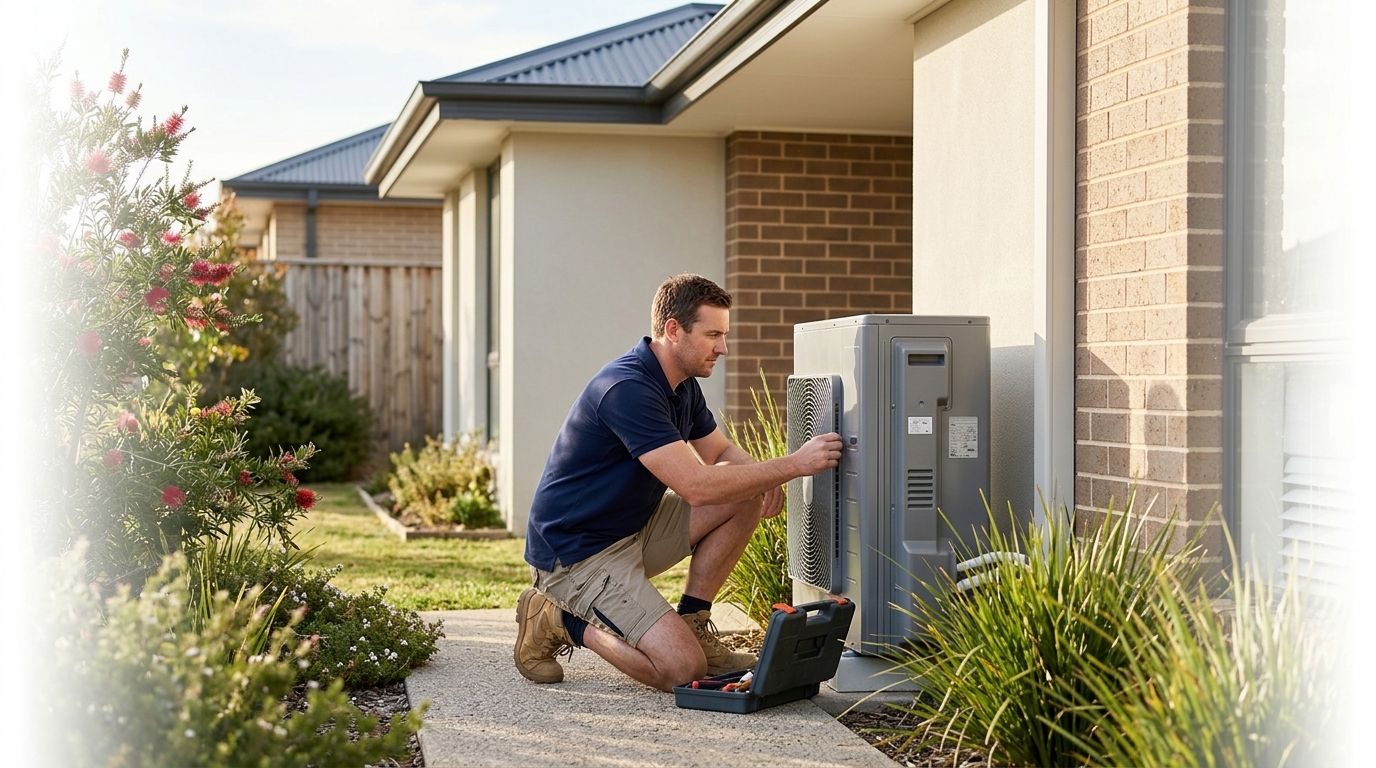
Refrigerative air conditioners use a sealed refrigerant cycle to extract heat and moisture from indoor air, then expel that heat outside. The result is cool, dry air regardless of what's happening outdoors. Most modern split systems also run the cycle in reverse to provide heating in winter.
This article compares both systems across the factors that matter most: upfront cost, running costs, climate suitability, maintenance requirements and overall versatility.
Key takeaways
- Evaporative cooling vs air conditioning depends on your climate, budget and year-round needs.
- Evaporative cooling costs less upfront and to run but only works in dry climates.
- Reverse-cycle air conditioning works everywhere, provides heating and controls humidity.
How Each System Works: A Side-by-Side Comparison
Evaporative cooling and refrigerative air conditioning are fundamentally different technologies, and that difference shows up clearly across cost, performance and practicality. Here's how they stack up across six key dimensions.
| Feature | Evaporative Cooling | Air Conditioning (Refrigerative) |
|---|---|---|
| Upfront Cost | Lower. Ducted evaporative systems typically range from $3,000 to $6,000 installed. Portable units start under $500. | Higher. A quality split system starts from around $1,177 (e.g. Daikin 3.5kW LITE FTXF35WVMA) for the unit alone, with installation adding $600 to $1,500. Ducted refrigerative systems can exceed $10,000 installed. |
| Running Cost (per hour estimate) | Very low. Typically $0.05 to $0.15 per hour, as the only power draw is the fan and water pump. | Moderate. A 3.5kW inverter split system costs roughly $0.25 to $0.50 per hour depending on conditions and energy tariff. |
| Best Climate | Dry, low-humidity climates. Works well in inland and semi-arid regions such as Perth, Adelaide and much of regional Victoria. | All Australian climates. Performs consistently in humid coastal cities including Sydney, Brisbane and Darwin where evaporative cooling struggles. |
| Heating Capability | None. Evaporative coolers are cooling-only systems. | Yes. Reverse-cycle split systems provide efficient heating in winter, often with a coefficient of performance above 3.0. |
| Humidity Control | Adds moisture to the air. This is a benefit in very dry conditions but makes humid days feel worse. | Removes moisture from the air. Maintains comfortable humidity levels regardless of outdoor conditions. |
| Environmental Impact | Lower energy consumption means a smaller carbon footprint. Uses water, which can be a concern in drought-prone areas. | Higher energy use, though inverter technology and high energy star ratings have significantly reduced the gap in recent years. |
The headline takeaway is straightforward. Evaporative cooling is the clear winner on upfront cost and running cost, provided you live in a dry climate where it can actually do its job. Refrigerative air conditioning costs more to buy and run, but it works everywhere, handles humidity and crucially also heats your home in winter. For most Australian households that need year-round comfort, a reverse-cycle split system offers a level of versatility that an evaporative cooler simply cannot match.

Which Climate Is Each System Suited To?
Australia's climate varies so dramatically from region to region that the evaporative cooling vs air conditioning question is genuinely a different question depending on where you live. A system that's perfect for a home in Broken Hill could be almost useless in Brisbane. Before looking at cost or features, your local climate should be the first thing you consider.
Hot and Dry Climates (Inland and Southern Australia)
Evaporative cooling thrives in hot, dry conditions because low ambient humidity gives the evaporation process room to work. The drier the air, the more moisture it can absorb, and the greater the temperature drop you get across the cooling pads. In places like Broken Hill, Mildura and Perth's inland suburbs, running costs can be as low as $0.10 to $0.20 per hour, making evaporative cooling genuinely hard to beat on value.
On extreme days above 40°C, even in dry climates, an evaporative cooler can struggle to bring indoor temperatures below 26 to 28°C. A quality reverse-cycle split system will hold whatever temperature you set, regardless of what's happening outside. For most dry-climate households, evaporative cooling handles the bulk of summer comfortably, but it does have a ceiling.
Humid and Coastal Climates (Queensland and the North)
High ambient humidity is the enemy of evaporative cooling. The air is already moisture-laden, so the evaporation process slows dramatically and the temperature drop you get across the pads becomes negligible. On a humid 35°C day in Brisbane or Darwin, an evaporative cooler may deliver air that feels warmer and stickier than what you started with. Refrigerative air conditioning is the only practical choice in these climates.
For whole-home coverage in Queensland homes, ducted air conditioners are a popular solution. A ducted refrigerative system delivers consistent, humidity-controlled cooling to every room through a single ceiling-mounted unit, which suits the open-plan layouts common in Queensland builds.
Temperate Climates (Melbourne, Adelaide, Perth)
Temperate climates sit in the middle, and the honest answer here is nuanced. Evaporative cooling works well on hot, dry summer days in Melbourne and Adelaide, and those cities do get plenty of them. But both cities also experience humid weather events, coastal sea breezes and cool winters where an evaporative cooler offers nothing at all.
A reverse-cycle split system or ducted refrigerative system gives you year-round reliability. Cooling in summer, heating in winter and consistent performance regardless of whether the day is dry or humid. For most households in temperate climates, that versatility makes refrigerative air conditioning the stronger long-term investment, even if the upfront cost is higher.
Upfront Costs, Running Costs, and Installation
The real cost of a cooling system goes well beyond the sticker price. Upfront purchase price, installation labour, ongoing running costs and annual maintenance all add up over the life of a system. Here's how evaporative cooling and refrigerative air conditioning compare across each of those areas.
| Cost Area | Evaporative Cooling | Refrigerative Air Conditioning |
|---|---|---|
| Unit Cost | $500 to $2,000 for the unit (ducted evaporative) | From around $1,177 for a quality split system (e.g. Daikin 3.5kW LITE FTXF35WVMA) |
| Installation Cost | $1,000 to $2,500 for ducted installation | $600 to $1,500 for a standard split system installation |
| Running Cost (per hour) | $0.10 to $0.20 (fan and water pump only, roughly 200 to 500W) | $0.25 to $0.50 (800 to 2,500W depending on conditions and tariff) |
| Annual Maintenance | Pad replacement once a year ($50 to $150) plus regular cleaning of the unit and water reservoir | Filter cleaning every four to six weeks (DIY) plus a professional service every one to two years ($100 to $200) |
On upfront cost, evaporative cooling has a clear edge for whole-home coverage. A ducted evaporative system installed typically lands between $3,000 and $6,000 all up, while a ducted refrigerative system can exceed $10,000. For single-room cooling, the gap narrows considerably. A split system air conditioners range starts from around $1,177 for the unit, which is competitive with a quality portable or window evaporative unit once you factor in installation.
Running costs tell a different story over time. Evaporative coolers use a fraction of the electricity a refrigerative system draws, which can translate to meaningful savings across a long Australian summer. That said, those savings only materialise if you live in a climate where the evaporative cooler is actually effective. Running an evaporative cooler in a humid climate doesn't just cost money, it also fails to cool your home.
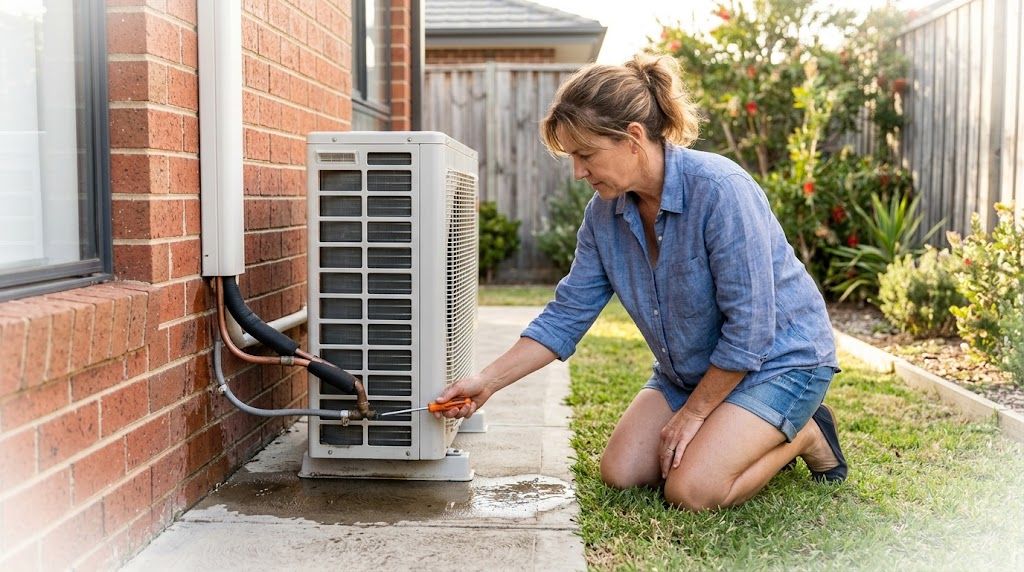
Maintenance is broadly comparable in effort, though different in nature. Evaporative coolers need their pads replaced annually and the water system kept clean to prevent mould and mineral build-up. Split systems need their filters cleaned regularly and a professional check every year or two to keep refrigerant levels and coils in good shape. For a full breakdown of what installation labour typically costs across different system types and states, the air conditioning installation cost guide covers it in detail.
Maintenance, Air Quality, and Comfort Factors
Beyond cost and climate, the day-to-day liveability differences between evaporative cooling and refrigerative air conditioning come down to three things: air quality, humidity comfort and noise. Evaporative coolers constantly draw in fresh outside air, which many people find less stuffy than recirculated air, but that same fresh air brings whatever is outside with it. Refrigerative systems filter and recirculate indoor air, run much more quietly and give you far more control over humidity.
Air Quality
Evaporative coolers pull 100% fresh air from outside, which is genuinely pleasant if you find recirculated air oppressive. The trade-off is that they also pull in pollen, dust, smoke and outdoor pollutants. On high-pollen days or during bushfire smoke events, an evaporative cooler can actively worsen indoor air quality. For allergy sufferers or households with asthma, this is a serious consideration.
Refrigerative split systems recirculate indoor air through a filter, which traps dust, pet dander and some allergens before the air is cooled and returned to the room. The catch is that those filters need regular attention. A clogged filter reduces airflow, forces the unit to work harder and can become a source of mould and bacteria if left too long. Cleaning your filters every four to six weeks is the minimum, and knowing the right technique makes a real difference. The guide on how to clean your air conditioner at home walks through the full process step by step.
Humidity and Comfort
Evaporative coolers add moisture to the air as part of the cooling process. In very dry inland conditions, that added humidity can actually feel pleasant and prevent the dry-throat discomfort that comes with extremely arid air. But on days where humidity is already elevated, even slightly, an evaporative cooler makes the air feel heavier and more uncomfortable rather than less.
Refrigerative air conditioners remove moisture from the air as they cool it. Most people find this dehumidifying effect more comfortable during muggy conditions, and it's one of the main reasons refrigerative systems are the only practical choice in coastal and tropical climates. If you've ever walked into a well-air-conditioned building on a sticky Brisbane afternoon, that relief comes largely from the drop in humidity, not just the drop in temperature.
Noise
Evaporative coolers produce a constant fan hum that some people find soothing and others find intrusive, particularly in bedrooms. The noise level varies by model and fan speed, but it's always present while the unit is running. Modern inverter split systems are considerably quieter. Premium models from Daikin and Mitsubishi Electric operate as low as 19dB indoors on their lowest fan setting, which is roughly the level of a quiet whisper. For light sleepers or anyone using the system in a bedroom, that difference is noticeable.
So, Which Should You Choose?
The evaporative cooling vs air conditioning decision comes down to three factors: your climate, your budget and how you want to use the system. If you get those three things right, either system can serve you well for 15 to 20 years.
Choose evaporative cooling if you live in a hot, dry inland climate such as Perth, Adelaide or regional Victoria, have a tighter upfront budget and are primarily looking to reduce summer heat rather than achieve year-round climate control. The running costs are genuinely low and the technology is simple and reliable.
Choose a reverse-cycle split system or ducted refrigerative system if you live in a humid or coastal area, want reliable heating in winter as well as cooling in summer, or simply need consistent performance regardless of what the weather is doing outside. Two solid entry-level options to consider are the Daikin 3.5kW Cora Inverter Split System (FTXV35WVMA) at $1,256 and the Mitsubishi Electric 3.5kW AP Series Split System (MSZAP35VGKD) at $1,229. Both are reverse-cycle inverter units that handle heating and cooling efficiently, and both come from brands with strong Australian service networks.
For most Australian households, a reverse-cycle split system offers the better long-term investment. The upfront cost is higher than a basic evaporative unit, but the year-round versatility, consistent performance and humidity control make it the more practical choice across the majority of Australian climates. Browse the full split system air conditioners range to compare models, capacities and prices.
Frequently Asked Questions
Is evaporative cooling cheaper to run than air conditioning?
Yes, evaporative cooling is significantly cheaper to run than refrigerative air conditioning. Evaporative coolers typically cost $0.10 to $0.20 per hour to operate, compared to $0.25 to $0.50 per hour for a reverse-cycle split system. However, those savings only apply if you live in a dry climate where the evaporative cooler can actually cool effectively.
Can evaporative cooling work in humid weather?
No, evaporative cooling performs poorly in humid conditions. The cooling process relies on moisture evaporating into dry air, so when outdoor humidity is already high, the temperature drop across the cooling pads becomes negligible. In coastal cities like Brisbane, Sydney and Darwin, refrigerative air conditioning is the only reliable option.
Does air conditioning work as a heater?
Yes, reverse-cycle air conditioners provide both heating and cooling. They run the refrigerant cycle in reverse to extract heat from outside air and deliver it indoors, even on cold days. Most modern inverter split systems heat a room more efficiently than a standard electric heater, with a coefficient of performance typically above 3.0.
Which system is better for Australian homes overall?
For most Australian homes, a reverse-cycle split system is the more versatile choice. Evaporative cooling suits dry inland climates and tight budgets, but it cannot heat, struggles in humidity and has a performance ceiling on extreme days. A reverse-cycle split system works in every Australian climate, year-round, making it the stronger long-term investment for the majority of households.