
Why Cleaning Your Air Conditioner Actually Matters
If your air conditioner has been running flat out through an Australian summer but the room still feels muggy and warm, a dirty unit is often the culprit. Knowing how to clean your air conditioner properly is one of the simplest things you can do to restore performance, cut your power bill and keep the air in your home genuinely fresh. Neglect it long enough and you will pay for it in more ways than one.
A clogged filter forces the unit to work harder to push air through, which drives up electricity consumption and puts extra strain on the compressor. Dirty coils lose their ability to transfer heat efficiently, so your home takes longer to cool down. On top of that, a build-up of dust, mould and bacteria in the unit gets blown straight into the air you breathe every day.
This guide walks you through cleaning the filters, indoor coils, drainage system and outdoor unit so you can tackle the whole job yourself with confidence.
Key takeaways
- Learning how to clean your air conditioner restores performance and cuts power bills significantly.
- DIY maintenance includes filters, coils, casing and outdoor condenser work.
- Professional service is needed for refrigerant work and deep chemical coil cleaning.
What You'll Need Before You Start
Before you touch any part of your air conditioner, gather everything you need so the job goes smoothly from start to finish. Having the right tools on hand makes the difference between a quick clean and a frustrating half-finished job.
Here is what to have ready:
- A soft brush or old paintbrush for dislodging dust from fins and vents
- A vacuum cleaner with a brush attachment for removing loose debris
- Mild detergent mixed with water, or a purpose-made coil cleaner spray for tougher grime
- A microfibre cloth for wiping down surfaces without scratching
- A spray bottle filled with clean water for rinsing
- A screwdriver (usually Phillips head) to remove the front panel if needed
- Protective gloves, especially if you are using any chemical coil cleaner spray
Safety first: always switch the unit off at the wall socket and at the circuit breaker before you touch anything inside or outside the unit. Turning it off via the remote is not enough. The unit can still draw power and some components hold a charge even when the remote shows it as off. Give it a few minutes after cutting power before you start work, and wear gloves any time you are handling a chemical spray.
How to Clean Your Air Conditioner: Step-by-Step
To clean your air conditioner at home, start by cutting power at the wall and circuit breaker, then remove and wash the filters, vacuum the evaporator coils, wipe down the casing and louvres, clear the condensate drain tray, and finish by cleaning the outdoor condenser unit before restoring power. The full process takes most homeowners around 30 to 45 minutes and requires no special trade skills.
- Turn off the power at the wall socket and at the circuit breaker. Do not rely on the remote control alone. The unit can still draw power when switched off via remote, and some internal components hold a charge. Wait a few minutes before touching anything.
- Open the indoor unit's front panel. On most split systems this means lifting or unclipping the plastic cover. No tools are needed on the majority of modern units.
- Remove the filters. Slide them out carefully and take note of which way they face so you can reinsert them correctly.
- Vacuum loose dust from the filters. Use a brush attachment and work gently across the surface. Then wash the filters under warm running water with a small amount of mild detergent. Rinse thoroughly and leave them flat to dry completely in a shaded spot. Do not reinsert damp filters.
- Vacuum or gently brush the evaporator coils. These are the metal fins sitting directly behind where the filters were. Use a soft brush attachment and work in the direction of the fins, not across them. Do not press hard or bend the fins. DIY-safe with care. Deep chemical coil cleaning must be done by a licensed technician.
- Wipe down the inside of the unit casing and the louvres. Use a damp microfibre cloth to remove dust and grime from all accessible interior surfaces. Wring the cloth out well so you are not dripping water onto electrical components.
- Check and clear the condensate drain tray. If your unit has an accessible drain tray, remove any visible debris and pour a small amount of clean water into it to confirm it drains freely. A blocked drain tray is a common cause of water leaking from the indoor unit.
- Reinsert the dry filters and close the front panel. Double-check the filters are fully dry and seated correctly before closing up.
- Move to the outdoor condenser unit. Clear away any leaves, dirt, grass clippings or overgrown vegetation from around the unit. Aim to keep at least 500mm of clear space on all sides.
- Rinse or wipe down the condenser. If you can access the fins from the inside of the unit, a gentle low-pressure rinse from the inside out works well. Otherwise, wipe down the exterior casing with a damp cloth. Never use a high-pressure washer.
- Restore power and run the unit on fan-only mode for 10 to 15 minutes. This circulates air through the system and helps dry any residual moisture from internal components before you switch to cooling or heating mode.
Important: steps 1 to 8 are DIY-safe for most homeowners. Any work involving refrigerant lines, electrical components or a deep chemical clean of the evaporator coils must be carried out by a licensed air conditioning technician. Attempting refrigerant-related work without a licence is illegal in Australia.
Cleaning the Indoor Unit (Filters and Coils)
The filters are the part of your air conditioner that needs attention most often. During heavy use in summer or winter, aim to clean them every two to four weeks. At a minimum, clean them at least once per season before you start relying on the unit heavily.
Most modern split system air conditioners have slide-out filters that require no tools to remove, which makes this genuinely one of the easier household maintenance jobs. The Daikin 2.5kW ALIRA X Inverter Split System (FTXM25YVMA, from $1,162) is a good example: the filters slide out in seconds, rinse clean easily and slot straight back in once dry. No screwdrivers, no fuss.
The single most important rule with filters is this: they must be completely dry before you reinsert them. Putting a damp filter back into the unit creates the exact warm, moist conditions that mould and bacteria thrive in. If you are cleaning on a cool or overcast day, give the filters a full two to three hours to air dry rather than rushing the job.
For the evaporator coils, a gentle vacuum with a soft brush attachment is all that is needed for routine maintenance. Work carefully in the direction of the fins and stop if you feel any resistance. Bent fins restrict airflow and reduce efficiency, and straightening them is a job for a technician, not a DIY fix.
Cleaning the Outdoor Unit (Condenser)
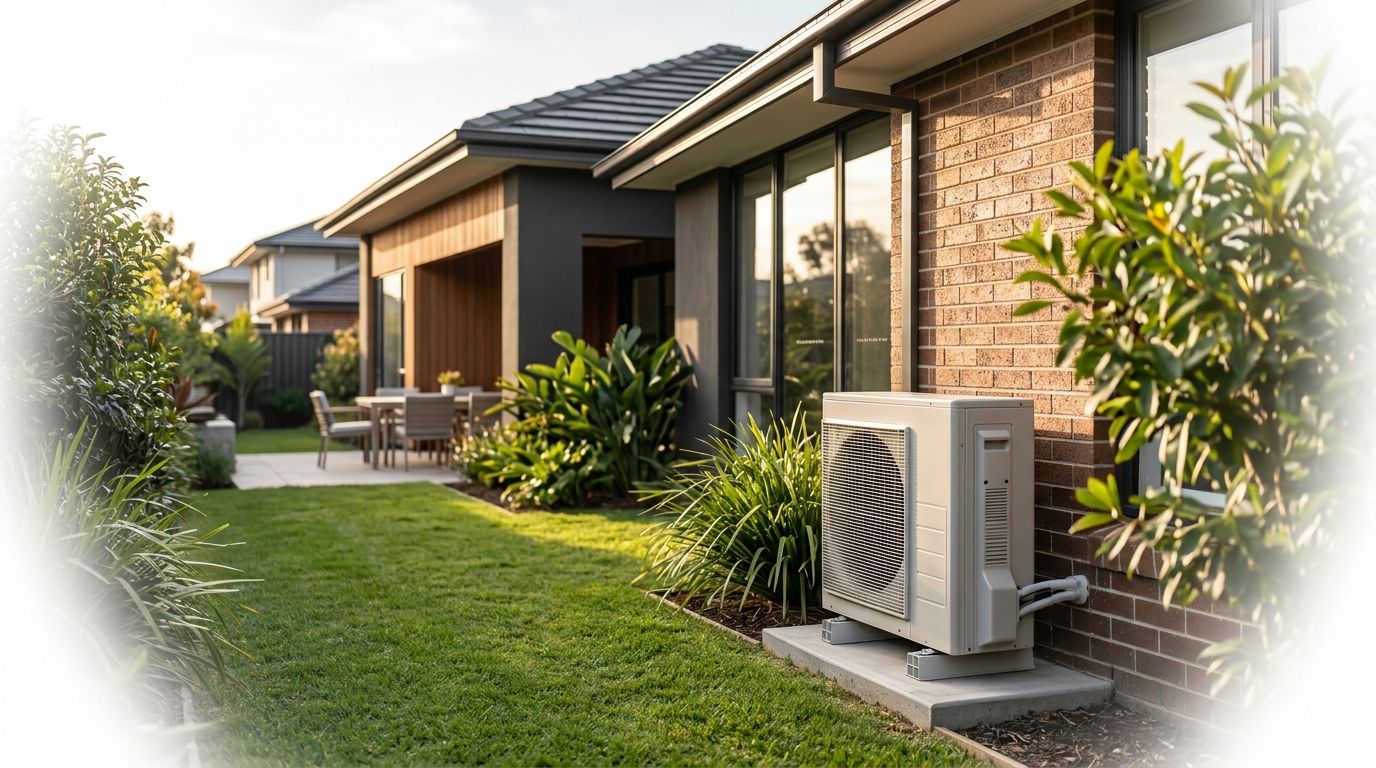
The outdoor condenser unit does the heavy lifting of releasing heat from your home into the outside air. Its aluminium fins need to breathe freely to do that job efficiently. When those fins get clogged with dirt, grass clippings, cottonwood or leaf debris, the unit has to work harder, your electricity bill goes up and the compressor runs hotter than it should.
Keep at least 500mm of clear space around all sides of the outdoor unit. Trim back any shrubs or plants that have crept close, and check after storms or windy days for debris that may have collected against the casing.
A gentle rinse with a garden hose on a low-pressure setting is the right approach for the condenser fins. If you can access the inside of the unit, rinse from the inside out so you are pushing dirt out rather than further in. Never use a high-pressure washer on the fins. The aluminium is soft and bends easily, and bent fins are far more damaging to efficiency than a bit of surface dirt.
The outdoor unit generally needs less frequent attention than the indoor unit. Cleaning it once or twice a year is usually sufficient for most Australian homes. If the fins are heavily fouled, visibly bent or corroded, book a professional service rather than trying to fix it yourself.
How Often Should You Clean Your Air Conditioner?
For most Australian homes, clean the filters every two to four weeks during peak summer and winter use, do a full indoor unit clean every three months, and book a professional service once a year. Sticking to this schedule keeps your unit running efficiently and catches small problems before they become expensive ones.
Here is a simple schedule to follow:
| Task | Recommended Frequency | DIY or Professional? |
|---|---|---|
| Filter clean | Every 2 to 4 weeks during heavy use | DIY |
| Full indoor unit clean (filters, coils, casing, drain tray) | Every 3 months | DIY |
| Outdoor condenser clean | Once or twice a year | DIY |
| Professional service (coil deep-clean, refrigerant check, electrical inspection) | Once a year | Licensed technician |
Households with pets, smokers or allergy sufferers should move to the more frequent end of that filter-cleaning range. Pet hair and dander clog filters faster than ordinary household dust, and a dirty filter is one of the worst things for anyone with asthma or hay fever.
If allergies are a concern, it is also worth looking at advanced filtration options. The Mitsubishi Electric Plasma Quad Connect Filter (MAC-100FT-E, $208) is an aftermarket upgrade that captures finer particles than a standard filter, which can meaningfully extend the interval between deep cleans for sensitive households.
If your unit is still underperforming after a thorough clean, the issue may be low refrigerant rather than dirt. Read our guide to aircon regas: what it is and when you need it to understand the signs and what a regas service involves.
When to Call a Professional Instead
Some air conditioner problems sit well beyond what a homeowner should attempt to fix. As a general rule, if the issue involves refrigerant, internal electrical components or anything that has progressed past surface-level dirt, stop and call a licensed technician. A professional service typically costs $150 to $300, which sounds like a lot until you compare it to a compressor replacement that can run to $1,500 or more.
Call a professional if you notice any of the following:
- Mould or mildew inside the unit beyond surface dust. A damp cloth can handle light surface grime, but visible mould growth on the coils or inside the casing needs a chemical treatment that requires proper equipment and ventilation.
- Ice forming on the coils or refrigerant lines. This usually points to low refrigerant, a blocked airflow path or a failing component. Running the unit while it is icing up causes compressor damage.
- Unusual noises such as grinding, rattling or hissing. Grinding suggests a motor or fan bearing issue. Hissing often indicates a refrigerant leak. Neither is a DIY fix.
- The unit blows warm air after a thorough clean. If you have cleaned the filters and coils and the unit still cannot cool properly, low refrigerant is the most likely cause.
- Any work involving refrigerant. In Australia, handling refrigerant without an ARCtick licence is illegal under the Ozone Protection and Synthetic Greenhouse Gas Management Act. This is not a grey area. Do not attempt it.
- Annual deep-service of the evaporator and condenser coils. A licensed technician has the chemical coil cleaners, pressure equipment and know-how to do this properly without damaging the fins or leaving residue that causes corrosion.
If your unit is more than 10 to 12 years old and is showing multiple of these signs, it may be more cost-effective to replace it than to keep pouring money into repairs. Older units also run far less efficiently than modern inverter models, so the energy savings from an upgrade can offset a good portion of the purchase price over time. If you are at that point, browse our best-selling air conditioners to see what is available at a range of price points.
Keep Your Aircon Running at Its Best
Regular maintenance is genuinely one of the most straightforward things you can do to protect a significant household investment. Clean filters every two to four weeks during heavy use, do a full indoor unit clean every three months, give the outdoor condenser a rinse once or twice a year and book a professional service annually. That routine takes under an hour of your time each quarter and keeps your unit running efficiently for years longer than a neglected one.
The single biggest impact comes from the simplest task: keeping the filters clean. Everything else follows from that. And if you work through the full step-by-step process in this guide and something still does not seem right, trust your instincts and call a technician rather than pushing on.
If you are thinking about upgrading to a newer, more efficient model, take a look at our split system range. For replacement filters, cleaning sprays and other maintenance add-ons, you will find what you need in our air conditioner accessories collection.
Frequently Asked Questions
How often should I clean my air conditioner filter?
Clean your air conditioner filter every two to four weeks during periods of heavy use in summer and winter. During milder months when the unit runs less often, once every four to six weeks is usually sufficient. At an absolute minimum, clean the filters at the start of each season before you begin relying on the unit heavily.
Can I clean my air conditioner myself?
Yes, most of the routine maintenance on a split system air conditioner is straightforward DIY work. Cleaning the filters, wiping down the indoor casing, vacuuming the evaporator coils gently and rinsing the outdoor condenser are all tasks a homeowner can handle safely. Any work involving refrigerant, internal electrical components or a deep chemical coil clean must be done by a licensed technician. In Australia, handling refrigerant without an ARCtick licence is illegal.
What happens if you don't clean your air conditioner?
A neglected air conditioner works harder to push air through clogged filters, which drives up your electricity bill and puts extra strain on the compressor. Dirty coils lose their ability to transfer heat efficiently, so the unit takes longer to cool or heat your home. Over time, a build-up of mould and bacteria inside the unit gets circulated through your indoor air, which is a real concern for anyone with asthma or allergies.
How do I know if my air conditioner needs a professional service?
Book a professional service if you notice ice forming on the coils or refrigerant lines, hear grinding or hissing noises, or find the unit still blowing warm air after a thorough clean. Visible mould growth inside the unit, a persistent musty smell or water leaking from the indoor head are also signs that a technician should take a look. As a baseline, every unit should have a professional service once a year regardless of how well it appears to be running.