
What Is Reverse Cycle Air Conditioning?
Reverse cycle air conditioning is a system that both heats and cools your home using a single unit, making it the most versatile climate control option available in Australia. Unlike a standard cooling-only air conditioner, a reverse cycle system can switch between modes by reversing the direction of its refrigerant cycle, extracting heat from outside air to warm your home in winter and expelling heat from inside to cool it in summer.
It is by far the most common type of air conditioner sold in Australia. The term covers several different system types: split systems, multi-head split systems and ducted systems. All of them use the same underlying technology.
This article explains how the refrigerant cycle works, walks through the main system types, covers the pros and cons, and helps you figure out which option suits your home.
Key takeaways
- Reverse cycle air conditioning heats and cools using a single unit by moving heat rather than creating it
- Three main types are available: split systems, multi-head split systems and ducted systems
- Energy efficiency of 3 to 5 times better than electric heaters makes reverse cycle the most cost-effective option
How Does Reverse Cycle Air Conditioning Work?
A reverse cycle air conditioner moves heat from one place to another using a refrigerant, a fluid that absorbs and releases heat as it changes between liquid and gas states. The system does not generate heat by burning fuel or using a heating element. It simply shifts heat that already exists in the air, which is why it is so much more efficient than a conventional heater.
Here is how the four key stages work in heating mode:
- Heat absorption outdoors. The outdoor unit draws in outside air across an evaporator coil filled with refrigerant. Even on a cold winter day, there is enough heat energy in the air for the refrigerant to absorb it and evaporate into a gas.
- Compression. The compressor pressurises that refrigerant gas, which raises its temperature significantly. At this point the refrigerant is a hot, high-pressure gas.
- Heat release indoors. The hot refrigerant travels to the indoor unit, where it passes through a condenser coil. A fan blows room air across the coil, the refrigerant releases its heat into the room, and the air coming out of your unit is warm.
- Expansion and reset. The refrigerant passes through an expansion valve, drops back to a low pressure and low temperature, and the cycle starts again.
In cooling mode, a component called the reversing valve flips the direction of the cycle. The indoor unit now acts as the evaporator, absorbing heat from your room air. That heat is carried outside by the refrigerant and expelled through the outdoor unit. Your room cools down because heat is being continuously removed from it, not because cold air is being pumped in.
Why Is It More Efficient Than a Heater?
A reverse cycle system is dramatically more efficient than a resistive electric heater because it moves heat rather than creating it. The efficiency of a reverse cycle system is measured by its Coefficient of Performance, or COP. A COP of 3.5 means the system delivers 3.5 kW of heating output for every 1 kW of electricity it consumes.
Compare that to a standard electric bar heater or panel heater, which has a COP of exactly 1. Put in 1 kW of electricity, get 1 kW of heat. There is no way to improve on that because the heater is simply converting electricity to heat directly. A reverse cycle system, by contrast, is harvesting heat energy that already exists in the outside air and moving it indoors, so it can deliver three to five times more output than it consumes in electricity.
In practical terms, running a reverse cycle split system to heat a bedroom on a cold Canberra night will typically cost you a fraction of what a portable electric heater would cost for the same result. The efficiency advantage is real and measurable on your power bill.
Most modern reverse cycle units are also inverter air conditioner models, which adds another layer of efficiency by varying the compressor speed to match the exact heating or cooling demand rather than cycling on and off at full power. The combination of the reverse cycle principle and inverter technology is what makes today's split systems so economical to run.

Types of Reverse Cycle Air Conditioning Systems
Reverse cycle air conditioning is available in three main form factors in Australia: split systems, multi-head split systems and ducted systems. All three use exactly the same refrigerant-based heat pump technology described above. The difference is in how many rooms they serve, how they are installed and how much they cost to buy and run.
Split Systems
A split system is the most popular type of reverse cycle air conditioner in Australia, and for good reason. It consists of one indoor wall-mounted unit and one outdoor unit, connected by refrigerant lines through the wall. Installation is straightforward, the upfront cost is lower than other system types and the units are available in a wide range of capacities to suit bedrooms, living rooms and open-plan spaces.
At the affordable end, the Daikin 3.5kW Cora Inverter Split System (FTXV35WVMA) is a popular choice at $1,287. It suits a medium-sized bedroom or small living area and is one of the best-selling units in Australia for good reason. For larger rooms, the Mitsubishi Electric 6kW AP Series (MSZ-AP60VGKD2) at $1,967 delivers serious heating and cooling capacity for open-plan living areas or large master bedrooms. Both are inverter models, so running costs are kept low.
Split systems are the natural starting point for most households. Browse the full range of split system air conditioners to compare capacities and brands.
Multi-Head Split Systems
A multi-head split system connects two to five indoor units to a single outdoor unit. This is a practical solution for homes where multiple rooms need conditioning but roof space or outdoor wall space is limited. Having one outdoor unit instead of several reduces visual clutter and can lower total installation cost compared to fitting separate single split systems in each room.
Indoor units in a multi-head setup are the same wall-mounted units used in standard split systems. The Daikin 3.5kW Alira X (FTXM35YVMA) at $1,447 is a popular choice as an indoor unit in these configurations, offering built-in WiFi and a slim profile. Each indoor unit can be controlled independently, so you only condition the rooms that are actually in use.
Ducted Reverse Cycle Systems
Ducted systems are the whole-home solution. The main unit sits concealed in the roof cavity and delivers conditioned air through a network of ducts to ceiling vents in every room. There are no wall-mounted units visible anywhere in the house, which gives a clean, unobtrusive finish that suits new builds and renovations alike.
The trade-off is cost. Ducted systems carry a significantly higher upfront price for both the equipment and the installation, and they are most cost-effective when you need to condition most of the home regularly. Zone control can help manage running costs by only conditioning the areas in use. If whole-home coverage with a clean aesthetic is the priority, explore our range of ducted air conditioners to find the right system for your home.
Pros and Cons of Reverse Cycle Air Conditioning
Reverse cycle air conditioning offers year-round heating and cooling from a single system, outstanding energy efficiency and a long service life, but it does come with a higher upfront cost and some installation requirements worth understanding before you buy.
The Advantages
- One system for all seasons. A single reverse cycle unit replaces both a heater and an air conditioner, reducing the number of appliances you need to buy, install and maintain.
- High energy efficiency. A COP of 3 to 5 means you get three to five units of heating or cooling output for every unit of electricity consumed. No other common home heating technology comes close to that ratio.
- Safe to operate. There is no open flame, no exposed heating element and no combustion. The indoor unit blows warm air but the surface itself does not get dangerously hot, making it a safer option around children and pets than a gas heater or bar heater.
- Built-in air filtration and dehumidification. Most units filter dust and allergens from the air as they operate, and in cooling mode they also remove humidity, which makes a real difference in humid coastal climates.
- Quiet operation. Modern inverter split systems run at very low noise levels, often below 20 decibels on the indoor unit at low fan speed.
- Long lifespan. A well-maintained reverse cycle system typically lasts 15 to 20 years, spreading the upfront cost over a long period.
The Disadvantages
- Higher upfront cost. A reverse cycle split system starts at around $1,200 to $1,500 for the unit alone, plus $600 to $1,200 for professional installation. That is a bigger initial outlay than a portable heater or pedestal fan, though the running cost savings close the gap quickly. For a broader look at how reverse cycle compares to other options, see our guide to types of heaters for home use in Australia.
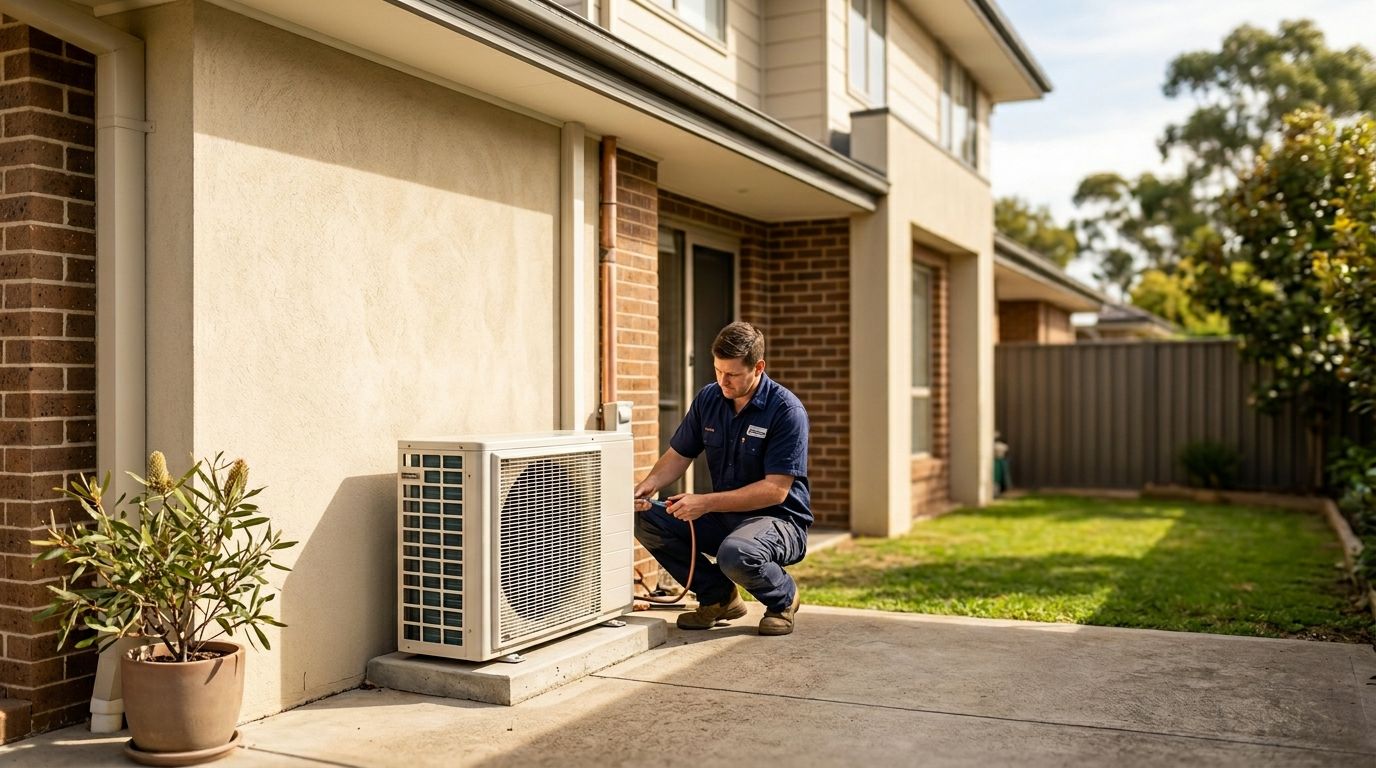
- Professional installation required. Refrigerant work must be carried out by a licensed air conditioning technician. This is not a DIY job, and the installation cost needs to be factored into your budget from the start.
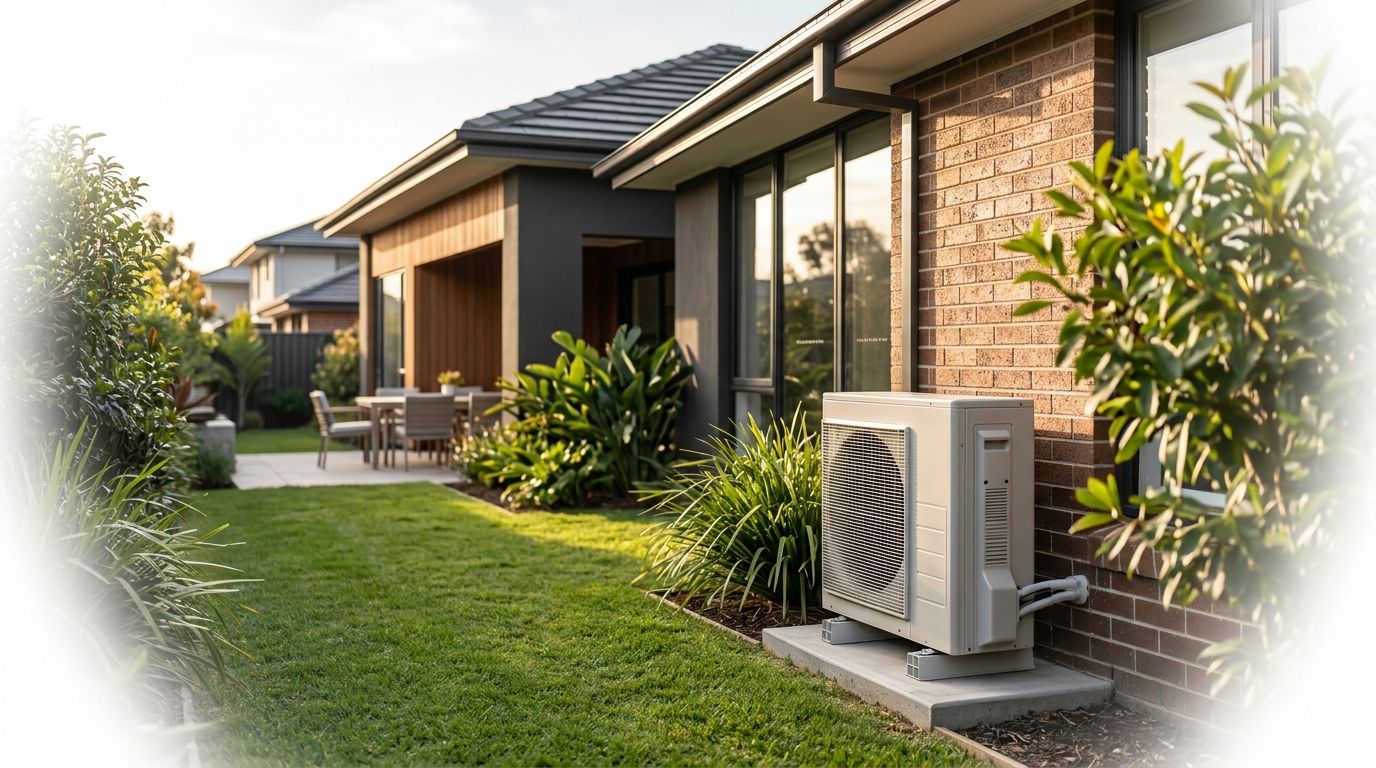
- Outdoor unit placement. The outdoor unit needs adequate clearance for airflow and must be positioned where it will not cause noise issues for neighbours. This can be a constraint on smaller blocks or apartments.
- Performance in extreme cold. Most modern reverse cycle units operate effectively down to around minus 10 to minus 15 degrees Celsius, which covers the vast majority of Australian conditions. However, in alpine areas or during unusually severe cold snaps, heating output can drop at the very low end of that range. For most Australian homes, this is not a practical concern.
Is Reverse Cycle Air Conditioning Right for Your Home?
Reverse cycle air conditioning is the right choice for most Australian homes. The combination of year-round heating and cooling from a single unit, energy efficiency that outperforms every common alternative and a lifespan of 15 to 20 years makes it hard to beat on long-term value. For the vast majority of households, the question is not whether to go reverse cycle, but which type and size to buy.
Three factors will guide that decision:
- Room size and kW capacity. Getting the capacity right is the most important step. An undersized unit will struggle on hot days and cold nights; an oversized one will short-cycle and waste energy. Our guide to what size air conditioner do I need walks through the calculation room by room.
- Single room or whole home. A split system is the most cost-effective solution for one or two rooms. Multi-head split systems suit homes where several rooms need conditioning but outdoor space is limited. Ducted is the right call when you want whole-home coverage with no visible wall units.
- Budget. Entry-level split systems like the Daikin 3.5kW Cora (FTXV35WVMA) start at $1,287 for the unit. Ducted systems for a full home can run to $10,000 or more installed. There is a reverse cycle option at every price point in between.
Browse the full range of reverse cycle split systems at AusAir Conditioners, or get in touch with our team if you would like advice on the right system for your home.
Frequently Asked Questions
Is reverse cycle air conditioning the same as a heat pump?
Yes, a reverse cycle air conditioner and a heat pump are the same technology. Both use a refrigerant cycle to move heat from one place to another, and both can reverse that cycle to provide heating or cooling. The term 'heat pump' is more common in Europe and in the context of hot water systems, while 'reverse cycle air conditioner' is the standard term used in Australia for the same type of unit.
Can reverse cycle air conditioning heat a room effectively in winter?
Yes. Modern reverse cycle systems operate effectively down to around minus 15 degrees Celsius outdoors, which covers virtually every Australian climate including alpine areas. In heating mode, a well-sized reverse cycle unit will warm a room faster and more cheaply than a portable electric heater, and it maintains a consistent temperature rather than cycling on and off.
How much does it cost to run a reverse cycle air conditioner?
Running costs depend on the unit's capacity, its energy star rating, your local electricity tariff and how often you use it. As a rough guide, a 3.5kW inverter split system running for eight hours a day might cost $1.50 to $3.00 per day at typical Australian electricity rates. A higher star rating and inverter technology both reduce that figure significantly compared to older or non-inverter models.
Do I need a separate heater if I have reverse cycle air conditioning?
No. A reverse cycle air conditioner provides both heating and cooling, so there is no need for a separate heater in the same room. The only exception would be in an extreme alpine location where temperatures regularly drop below the unit's rated operating range, but for the overwhelming majority of Australian homes, a reverse cycle system handles all heating and cooling needs on its own.