
Why Is Your Aircon Dripping Water Outside?
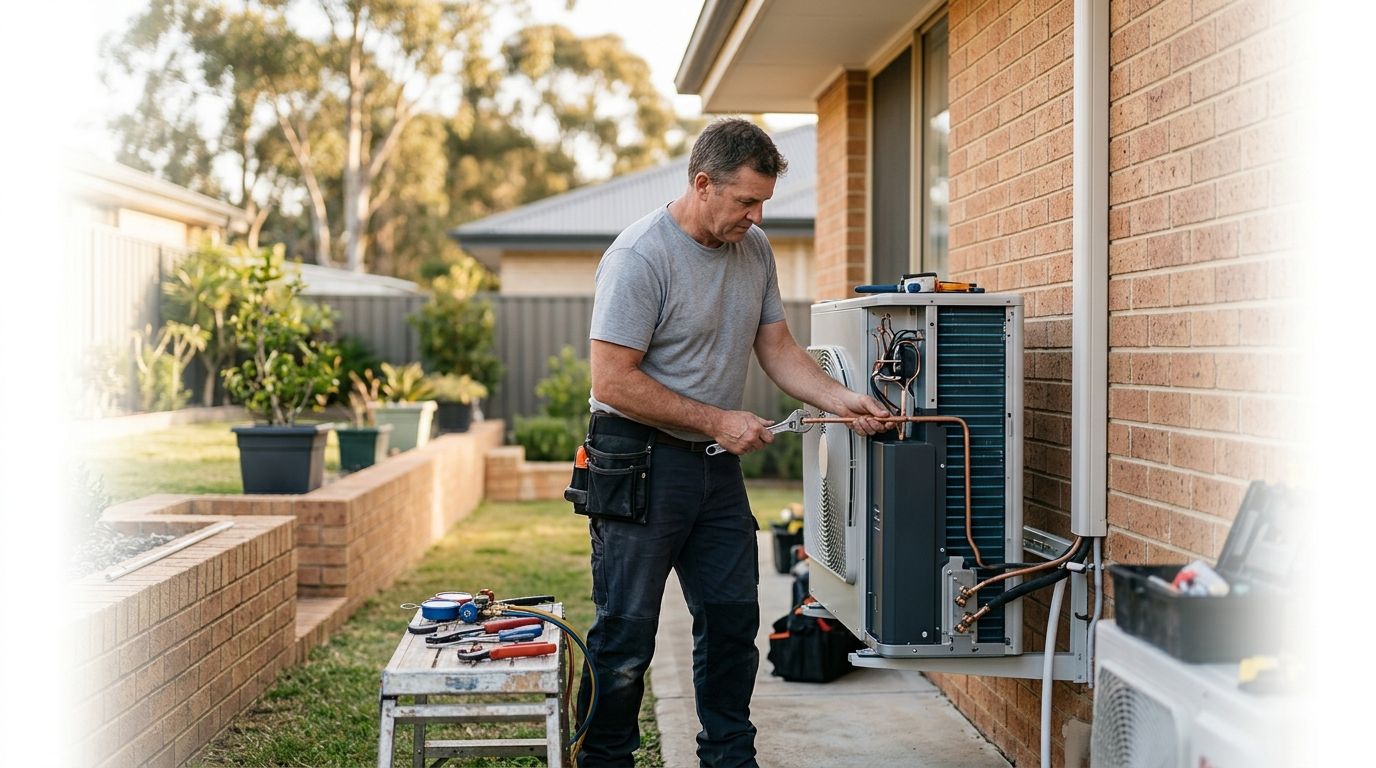
Spotting a puddle of water forming under your outdoor unit is enough to make any homeowner stop and stare. Aircon dripping water is one of the most common concerns we hear from Australian households, and the good news is that in the majority of cases it is completely normal. Your system is doing exactly what it was designed to do. That said, there are situations where dripping water is a warning sign worth acting on. This article covers three things: the normal causes of water dripping from your outdoor unit, the causes that signal a genuine problem, and how to know when it is time to call a technician.
Key takeaways
- Aircon dripping water from the outdoor unit is usually normal condensate drainage during cooling and defrost cycles.
- Water dripping from the indoor unit, pooling indoors, or accompanied by ice signals a problem requiring professional attention.
- A dirty air filter is the most common cause of excess water and coil freeze.
- Annual servicing prevents most drainage faults before they become expensive repairs.
When Aircon Dripping Water Outside Is Completely Normal
Most of the time, water dripping from your outdoor unit is a sign that your air conditioner is working properly. The refrigeration cycle naturally produces moisture, and that moisture has to go somewhere. On a hot, humid Australian summer day, particularly in Queensland or along the NSW coast, the volume of water can look surprisingly large. A steady drip or even a small stream pooling beneath the unit is not automatically a fault. Understanding where that water comes from makes it much easier to tell the difference between normal operation and a genuine issue.
Condensate Drainage: How It's Supposed to Work
As your air conditioner cools your home, warm indoor air passes over the evaporator coil inside the indoor unit. The coil is cold enough that moisture in the air condenses on its surface, much like water beading on a cold glass. That condensate drips down into a drain pan beneath the coil, then travels through a condensate pipe that runs out of the building and exits near the base of the outdoor unit or through a dedicated drain point on an exterior wall.
A slow, steady drip from this pipe is normal operation, not a fault. On particularly humid days, the volume increases simply because there is more moisture in the air being removed. If the drip is coming from the end of a small pipe near the outdoor unit and the water is clear, you can generally relax. That is the system doing its job.
Heating Mode and Defrost Cycles
Reverse cycle air conditioners also produce water in heating mode, and this surprises a lot of people. In winter, the outdoor unit extracts heat from the outside air, and frost can build up on the outdoor coil. To keep running efficiently, the unit periodically runs a defrost cycle, briefly reversing operation to melt that frost. The result is a sudden rush of water draining from the outdoor unit, sometimes quite a lot of it at once.
This is especially common in Melbourne, Canberra and alpine areas where overnight temperatures regularly drop close to or below zero. If you notice a burst of water from the outdoor unit on a cold morning followed by a cloud of steam, that is a defrost cycle completing normally. There is nothing wrong with your system.

Causes of Aircon Dripping Water That Signal a Problem
Not all aircon dripping water is harmless. Four specific faults account for the vast majority of problem cases in Australian homes: a blocked condensate drain line, a dirty air filter causing coil freeze, low refrigerant levels and a cracked or overflowing drain pan. Each one produces a distinct set of symptoms, so knowing what to look for makes it much easier to act quickly before minor drips turn into water damage.
If you are seeing water dripping from the indoor unit rather than the outdoor unit, that is a separate but related issue. Our companion article on air conditioner leaking water inside covers those causes and fixes in detail.
Blocked Condensate Drain Line
A blocked condensate drain line is the single most common cause of aircon water leaks in Australian homes. Over time, algae, mould, dirt and dust build up inside the condensate pipe, gradually narrowing the passage until water can no longer drain freely. When the blockage becomes severe enough, condensate backs up into the drain pan and overflows. You might notice a large puddle forming under the outdoor unit, water dripping from the indoor unit's casing, or damp patches on the ceiling or wall near the indoor head. The blockage itself is often invisible from the outside, which is why many homeowners are caught off guard by the volume of water that appears.
Dirty Air Filter Causing Coil Freeze
A clogged air filter starves the evaporator coil of the airflow it needs to stay at the right operating temperature. Without enough warm air passing over it, the coil drops below freezing and ice begins to form on its surface. The unit keeps running, the ice keeps building, and then when the system cycles off or the ice becomes thick enough to block airflow entirely, it all melts at once. That produces far more water than the drain pan and condensate pipe are designed to handle in a short period, causing overflow. Cleaning your AC filter regularly is the simplest way to prevent this. During heavy summer use, every four to six weeks is the right interval for most Australian households.
Low Refrigerant Levels
Refrigerant does not get 'used up' during normal operation. If your system is low on refrigerant, it means there is a leak somewhere in the circuit. Low refrigerant causes the pressure inside the evaporator coil to drop, making the coil run far colder than it should and causing ice to form. When that ice melts, the excess water overwhelms the drain system. The signs to watch for include noticeably reduced cooling performance even on a mild day, a hissing or bubbling sound coming from the indoor unit and visible ice on the refrigerant lines or the indoor coil itself. Refrigerant handling is strictly regulated in Australia and requires a licensed technician with an ARC (Australian Refrigeration Council) licence. This is not a DIY repair under any circumstances.
Damaged or Overflowing Drain Pan
The drain pan sits directly beneath the indoor evaporator coil and collects all the condensate before it travels down the drain line. In older units, particularly those more than 10 years old, the pan can develop cracks or corrode through entirely. A damaged pan cannot hold water long enough for it to drain properly, so it simply spills over. Rust staining around the base of the indoor unit or water appearing in unusual locations rather than at the expected drain exit point can both point to a pan problem. Replacement is a job for a technician, as accessing the pan requires partially disassembling the indoor unit.
What to Check First: A Quick DIY Assessment
Before you call a technician, there are four things you can safely check yourself in about 10 minutes. These visual checks will not fix the underlying problem, but they will help you understand what you are dealing with and give the technician useful information when you do call. For a broader overview of what can go wrong and how to respond, the guide to common air conditioner problems and fixes is worth bookmarking.
- Check and clean the air filter. Locate the filter behind the front panel of your indoor unit. If it is visibly grey, furry or clogged with dust, that is your most likely culprit. Remove it, rinse it under cool water, let it dry fully and reinstall it. Do not run the unit with the filter removed.
- Identify where the water is actually coming from. A slow drip from the end of a small pipe near the base of the outdoor unit or on an exterior wall is normal condensate drainage. Water dripping from the body of the indoor unit, pooling on the floor beneath it, or appearing on the ceiling is not normal and needs attention.
- Check that the outdoor unit is sitting level. An outdoor unit that has shifted or settled unevenly on its mounting pad can cause the drain pan inside the indoor unit to tilt, sending water in the wrong direction. A spirit level placed on top of the outdoor unit will confirm whether this is an issue.
- Look for ice on the indoor unit or refrigerant lines. Open the front panel of the indoor unit and look at the coil. Ice or frost on the coil or on the copper refrigerant lines running between the indoor and outdoor units points to either a dirty filter (check step one first) or a refrigerant issue that needs a licensed technician.
Anything beyond these four checks, including flushing the drain line, handling refrigerant, or inspecting electrical components, should be left to a qualified professional. Attempting drain line work without the right equipment can push a blockage deeper into the pipe and make the problem worse.
When to Call a Technician for a Leaking Aircon
Some aircon water issues are safe to investigate yourself, but five specific situations mean you should stop using the unit and call a licensed technician. A qualified technician can diagnose refrigerant faults, clear stubborn drain blockages and inspect components that are not safely accessible without the right tools. Attempting these repairs yourself risks voiding your warranty, damaging the unit further, or in the case of refrigerant work, breaking Australian law.
Call a technician if you notice any of the following:
- Large or sudden pooling of water under the indoor or outdoor unit, especially if it appears quickly rather than building up gradually over time.
- Ice on the indoor unit or refrigerant lines. Frost or ice visible on the copper lines or the indoor coil points to a refrigerant or airflow fault that needs professional diagnosis.
- Hissing or bubbling sounds coming from the indoor unit. These sounds are a strong indicator of a refrigerant leak, which requires an ARC-licensed technician to assess and repair.
- Water dripping from the indoor unit onto walls or furniture. This is never normal and usually means the drain pan is overflowing, cracked, or the unit is badly out of level.
- Reduced cooling or heating performance alongside the leak. A unit that is both leaking and struggling to reach temperature is almost certainly dealing with a refrigerant or coil fault.
The most reliable way to avoid all of these scenarios is annual servicing. A technician will clear the condensate drain, check refrigerant pressure, clean the coil and inspect the drain pan before small issues become expensive ones. A well-maintained split system air conditioner from a quality brand should rarely develop serious drainage faults. Units like the Fujitsu 2.5kW Lifestyle Range Inverter Split System ($1,014) and Daikin's Cora 5kW indoor unit ($465 for the indoor unit) are built to last well over a decade with proper annual care.
Frequently Asked Questions About Aircon Dripping Water
Is it normal for an air conditioner to drip water outside?
Yes, in most cases it is completely normal. Your air conditioner removes moisture from the indoor air as part of the cooling process, and that condensate drains out through a pipe that exits near the outdoor unit or on an exterior wall. A steady drip of clear water on a hot or humid day is a sign the system is working as designed, not a fault.
Why is my aircon dripping water inside the house?
Water dripping inside the house almost always points to a blocked condensate drain line, a frozen evaporator coil, or a cracked drain pan. When the drain line is blocked, condensate backs up and overflows the pan, sending water into the room. A dirty air filter is the most common trigger for coil freeze, so checking and cleaning the filter is the right first step.
How do I stop my air conditioner from leaking water?
Start by cleaning the air filter, as a clogged filter is the most common cause of excess water and coil freeze. If the filter is clean and the leak continues, check that the indoor unit is sitting level and look for ice on the coil or refrigerant lines. Persistent leaks, or any leak accompanied by reduced performance or unusual sounds, need a licensed technician rather than a DIY fix.
Can a leaking aircon cause damage to my home?
Yes, if left unaddressed. Condensate overflowing from the indoor unit can soak into ceiling plaster, wall cavities and flooring, leading to mould growth and structural damage that is far more expensive to fix than the original aircon fault. A small drip from the outdoor unit is harmless, but any water appearing inside the home or on interior walls should be treated as urgent.
Keep Your Aircon Running Clean and Dry
A small drip of water from your outdoor unit is almost always normal, a natural byproduct of the cooling and defrost processes your system runs through every day. The situations worth acting on are persistent pooling under the indoor unit, water appearing inside the home, ice on the coil or refrigerant lines and any leak paired with reduced performance. Catching these early saves you from far more expensive repairs down the track.
The two habits that prevent most drainage problems are straightforward: clean your air filter every four to six weeks during heavy use, and book an annual service so a technician can clear the condensate drain and check refrigerant pressure before small issues escalate.
If your current unit is ageing and developing recurring faults, it may be time to consider a replacement rather than another repair bill. A modern inverter split system like the Fujitsu 5kW Lifestyle Range Inverter Split System ($1,685) offers far better efficiency and reliability than a unit pushing 12 or 15 years old. Browse our range of split system air conditioners to compare models and find the right fit for your home, or get in touch and our team will point you in the right direction.