
Why Your Air Conditioner Is Leaking Water Inside
Spotting water dripping from your indoor air conditioning unit is enough to make anyone's stomach drop. An air conditioner leaking water inside your home is not something to ignore, but it is also not always a sign of catastrophic failure. The good news is that most causes are straightforward to diagnose and fix. This article walks you through the six most common reasons your unit is leaking, from a blocked drain line to a frozen evaporator coil, and explains what you can do about each one.
Key takeaways
- An air conditioner leaking water inside is usually caused by a blocked drain line, dirty filter or installation fault, not mechanical failure.
- Most causes can be diagnosed in minutes with basic checks like cleaning the filter and inspecting the drain pan.
- Regular filter cleaning and annual professional servicing prevent the vast majority of water leaks.
Is It Normal for an Air Conditioner to Drip Water?
A small amount of water draining away outside your home is completely normal. Your air conditioner produces condensation as part of its cooling process, and that moisture needs somewhere to go. What is not normal is water dripping or pooling inside your room, running down your wall, or staining your ceiling.
Here is how the process works. Your indoor unit contains an evaporator coil that gets very cold during operation. Warm, humid air from your room is drawn across this coil, and the moisture in that air condenses onto the coil's surface, much like water beads on a cold glass on a humid day. That condensed water drips down into a drain pan sitting beneath the coil, then flows out through a drain line to the outside of your home.
Under normal conditions, you will never see this water inside your home at all. The system is designed to handle it quietly in the background. On a particularly humid day, your unit may produce more condensation than usual, but a properly functioning system will drain all of it away without any visible dripping indoors.
The problem starts when something interrupts that drainage path. If the drain line is blocked, the drain pan overflows. If the coil freezes over and then thaws, it releases far more water than the pan can handle. If the unit is tilted at the wrong angle, water pools in the wrong spot and spills over the edge of the pan. Any of these faults will send water somewhere it should not be, which is when you notice the leak. The sections below cover each of these causes in detail.

Six Common Causes of an Air Conditioner Leaking Water Inside
The six most common causes of an air conditioner leaking water inside are a blocked drain line, a dirty filter freezing the evaporator coils, a cracked or overflowing drain pan, low refrigerant causing coil freeze, damaged pipe insulation and an indoor unit that was not installed level. Some of these you can fix yourself in minutes. Others need a licensed technician.
Blocked Drain Line
A blocked condensate drain line is the single most common reason an air conditioner leaks water inside. Over months and years of operation, dust, mould, algae and debris accumulate inside the drain line until water can no longer flow through it freely. When the line is fully or partially blocked, condensate backs up and overflows the drain pan, sending water into your room or ceiling.
A technician can flush the line with a wet-dry vacuum or pressurised air, which clears most blockages quickly. As a homeowner, you can check whether the drain outlet outside your home is dripping during operation. If it is completely dry while the unit is running, a blockage is very likely. Keeping up with annual servicing is the best way to prevent this from happening in the first place.
Dirty Air Filter Freezing the Evaporator Coils
A clogged air filter restricts the airflow that passes over the evaporator coils. Without enough warm air moving across them, the coils drop below freezing and ice over completely. The unit may keep running while encased in ice, but the real problem comes when you switch it off. The ice melts rapidly, releasing far more water than the drain pan can handle, and the overflow ends up on your floor or wall.
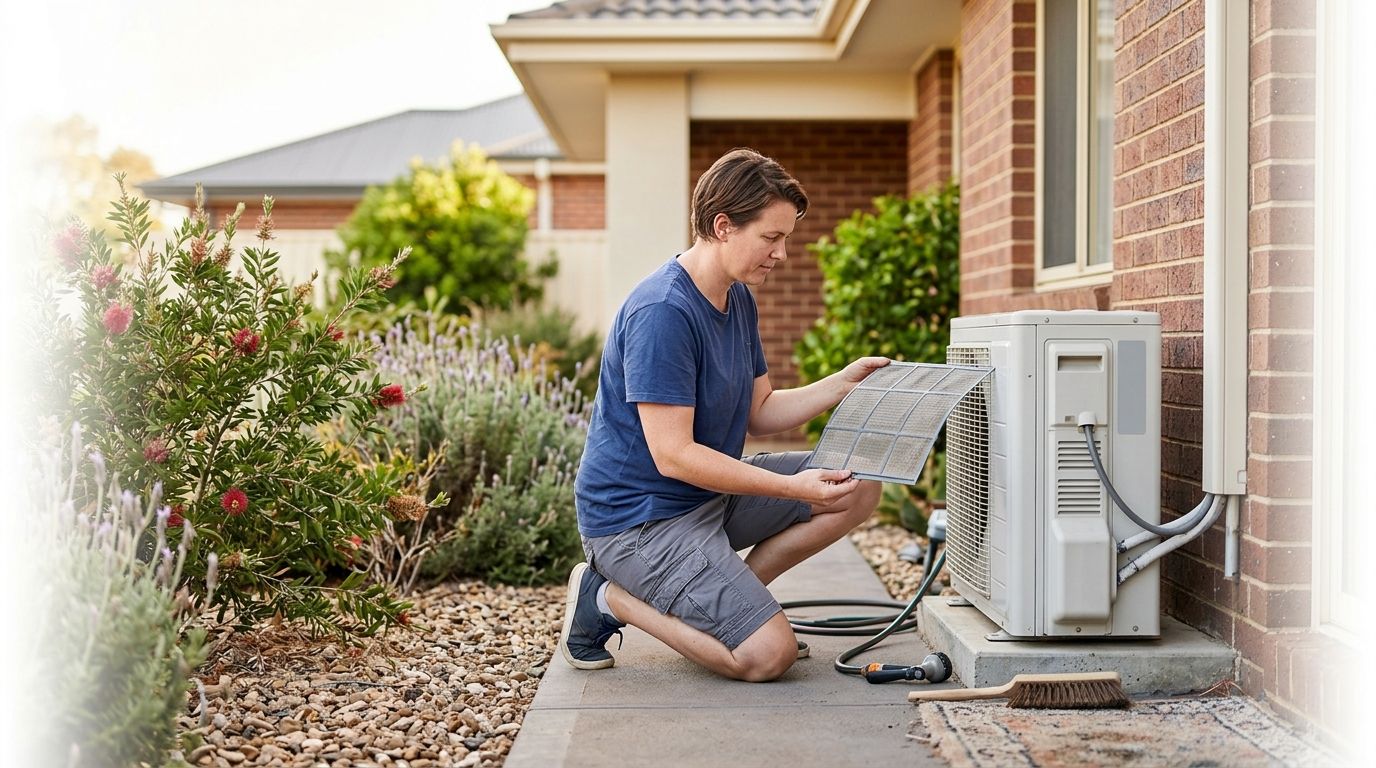
This is one of the easiest causes to rule out yourself. Pull out the filter, hold it up to the light, and if you cannot see through it, it needs a clean. Checking and cleaning your AC filter costs nothing and takes about five minutes. Most manufacturers recommend doing it every four to six weeks during heavy use.
Cracked or Overflowing Drain Pan
The drain pan, sometimes called the drip tray, sits directly beneath the evaporator coils and catches all the condensate before it flows into the drain line. Over time, plastic drain pans can crack from age or temperature stress, and metal pans can corrode. A pan can also become misaligned if the unit has shifted on its mounting bracket.
You can do a basic visual inspection yourself by removing the front cover panel of the indoor unit. Look for standing water, rust staining or visible cracks along the base of the pan. If the pan is cracked, it needs professional replacement. This is not a DIY repair, as accessing and reseating the pan correctly requires pulling apart the indoor unit.
Low Refrigerant Causing Coil Freeze
Low refrigerant reduces the pressure inside the evaporator coil, which causes the coil surface temperature to drop well below freezing. Ice builds up on the coil just as it does with a dirty filter, and when the unit cycles off, that ice melts and floods the drain pan. The difference here is that low refrigerant also means your system is not cooling properly, so you will usually notice reduced performance before the leak becomes obvious.
Other signs include ice visible on the indoor unit or the refrigerant pipes, and a unit that runs constantly without reaching the set temperature. Refrigerant work must be carried out by an ARC-licensed technician. It is illegal in Australia for anyone without that licence to handle refrigerant, and topping up the gas without finding and fixing the underlying leak will only delay the problem.
Damaged or Missing Pipe Insulation
The refrigerant pipes connecting your indoor and outdoor units are wrapped in foam insulation. That insulation serves a specific purpose: it stops warm, humid air from contacting the cold pipe surface and forming condensation on the outside of the pipe. If the insulation is cracked, compressed or missing entirely, moisture forms on the pipe and drips into whatever surface is below it, often a ceiling cavity or wall.
This is a common cause of ceiling water stains that homeowners mistake for a roof leak. If your ceiling is staining near where the refrigerant pipes run, check the pipe insulation in any accessible sections before calling a roofer. A technician can re-wrap damaged insulation during a service visit.
Unit Not Installed Level
Split system indoor units are designed to be mounted with a very slight tilt toward the drain outlet, typically just one or two degrees. This ensures condensate flows toward the drain line rather than pooling at the opposite end of the pan. If the unit was installed perfectly flat or tilted the wrong way, water collects at the front of the pan and eventually spills out over the edge.
You may notice dripping from the front corners of the unit rather than from the centre or bottom. This is an installation fault and requires a licensed installer to re-mount the unit at the correct angle. It is not something you can adjust yourself without removing the unit from the wall bracket.
How to Fix a Leaking Air Conditioner: What You Can Do Right Now
Before calling a technician, there are six quick checks you can run yourself that cover the most common causes of an indoor water leak. Most of these take under 10 minutes and require no tools or technical knowledge. Work through them in order before spending money on a service call.
- Turn the unit off at the remote or wall controller. This is the first thing to do. Leaving a leaking unit running risks further water damage to your walls, ceiling and flooring, and if the coils are frozen, running the unit will only add more ice. Switch it off and leave it off for at least two to three hours before inspecting anything.
- Protect your floors and walls immediately. Place towels around the base of the indoor unit and put a bucket or tray beneath any active drip point. If water has already reached a wall or ceiling, blot it dry as best you can to reduce the risk of mould forming in the cavity behind.
- Check and clean the air filter. Remove the front panel of the indoor unit and slide out the filter. If it is visibly clogged with dust and debris, rinse it under warm water, let it dry completely and refit it. A blocked filter is the cause of a large proportion of indoor leaks and fixing it costs nothing.
- Inspect the drain pan for standing water or cracks. With the front panel still off, look at the drain pan beneath the coils. If there is standing water sitting in the pan, the drain line is likely blocked. If you can see visible cracks or rust, the pan itself is the problem. Note what you find so you can describe it clearly to a technician.
- Check whether the indoor unit looks level on the wall. Step back and look at the unit from the front. If it appears to be tilting forward or sitting unevenly on its bracket, that could be causing water to pool at the wrong end of the drain pan. Do not attempt to adjust the mounting yourself.
- If the leak continues after cleaning the filter, call a licensed technician. Give the unit two to three hours off after cleaning the filter, then run it again briefly and watch for dripping. If the leak persists, the cause is most likely a blocked drain line, low refrigerant, a cracked pan or an installation issue. All of these require a professional. For a broader look at what else might be going wrong with your system, the guide to common air conditioner problems and how to fix them covers a wide range of faults beyond water leaks.
When to Call a Technician for a Leaking Air Conditioner
Some causes of an air conditioner leaking water inside are beyond what a homeowner can safely fix. Refrigerant leaks, cracked drain pans, damaged pipe insulation and a unit that needs re-levelling all require a licensed professional. Attempting these repairs yourself risks voiding your warranty, causing further water damage or breaking Australian law in the case of refrigerant handling.
Here is a clear breakdown of which jobs need a technician and roughly what to expect:
| Issue | Why a Technician Is Required | Typical Cost Range (AUD) |
|---|---|---|
| Refrigerant leak and regas | Handling refrigerant is illegal without an ARC licence under Australian law | $150 to $350+ depending on refrigerant type and quantity |
| Drain pan replacement | Requires dismantling the indoor unit and correctly reseating components | $100 to $250 including parts |
| Pipe insulation repair | Pipes may run through wall cavities or ceiling spaces requiring safe access | $80 to $180 depending on pipe length and access |
| Re-levelling the indoor unit | Unit must be removed from the wall bracket and remounted at the correct angle | $100 to $200 as part of a service call |
| Drain line flush (professional) | Pressurised clearing and full system check included in a standard service | $80 to $150 for a standard split system service |
For a full breakdown of what technicians charge across different job types, the guide to air conditioner service prices in Australia covers standard service calls, refrigerant work and more involved repairs in detail.
Acting quickly matters here. A slow drip that goes unnoticed for weeks can saturate ceiling plasterboard, soak wall insulation and warp timber flooring. Remediation for water-damaged ceilings and walls can easily run into the thousands, which makes a $150 service call look very reasonable by comparison.
It is also worth noting that the unit you own makes a real difference to how straightforward these jobs are. Well-engineered split systems like the Daikin Cora 2.5kW Inverter Split System (FTXV25WVMA, $1,065) and the Daikin Cora 3.5kW Inverter Split System (FTXV35WVMA, $1,287) are designed with accessible drain pans and filter housings that give technicians clear, unobstructed access during a service. The Fujitsu Lifestyle 2.5kW Inverter Split System (ASTG09KMTC, $1,014) takes a similar approach, with a front-access filter and a drain pan layout that does not require extensive disassembly to inspect or replace. Older or budget units can be far more awkward to work on, which adds time and cost to any repair.
How to Prevent Your Air Conditioner from Leaking Water in the Future
The vast majority of air conditioner water leaks are caused by neglected maintenance. A blocked drain line, frozen coils from a dirty filter and a cracked drain pan that went unnoticed for years are all problems that regular servicing catches before they become a leak. The good news is that prevention is straightforward and inexpensive compared to the cost of repairs or water damage.
Follow these four habits to keep your system running without leaks:
- Clean your filters every four to six weeks during heavy use. This is the single most effective thing you can do. A clean filter keeps airflow strong across the evaporator coils, which prevents freezing and the flood of meltwater that follows. It takes five minutes and costs nothing.
- Book an annual professional service for cooling-only units. For reverse cycle systems that run year-round for both heating and cooling, twice-yearly servicing is worth the investment. A technician will flush the drain line, inspect the drain pan, check refrigerant pressure and look over the pipe insulation in one visit.
- Ask your technician to confirm drain line flow during every service. A quick check that water is flowing freely through the condensate line and draining correctly outside takes seconds during a service call. If it is not part of the standard checklist, ask for it specifically.
- Keep the area around the indoor unit clear. Furniture, curtains or shelving pushed up close to the unit restricts the airflow the system needs to operate correctly. Poor airflow contributes to coil freeze and puts extra strain on the system overall.
If your current unit is ageing, leaking repeatedly or simply not worth the ongoing repair costs, it may be time to consider a replacement. Newer inverter split systems are more reliable, more energy efficient and easier to maintain than units from 10 or more years ago. Browse our range of split system air conditioners to compare current models from Daikin, Fujitsu, Mitsubishi Electric and more.
Frequently Asked Questions
Why is my air conditioner leaking water inside the house?
The most common reasons an air conditioner leaks water inside are a blocked condensate drain line, a clogged air filter causing the evaporator coils to freeze and then flood the drain pan, a cracked or misaligned drain pan or low refrigerant pressure. In most cases the fault is a maintenance issue rather than a mechanical failure, and cleaning the filter is always the first thing to check.
Is it safe to run an air conditioner that is leaking water?
No. You should switch the unit off at the controller as soon as you notice an indoor water leak. Running a leaking unit risks further water damage to your walls, ceiling and flooring, and if the coils are frozen, continued operation will only add more ice. Leave the unit off for two to three hours, then inspect the filter and drain pan before deciding whether to call a technician.
Can I fix a leaking air conditioner myself?
You can fix some causes yourself. Cleaning a clogged filter takes five minutes and costs nothing, and it resolves a large proportion of indoor leaks. However, a blocked drain line, cracked drain pan, refrigerant leak or incorrectly levelled unit all require a licensed technician. Attempting refrigerant work without an ARC licence is illegal in Australia.
How do I stop my air conditioner from leaking water in the future?
Clean your filters every four to six weeks during periods of heavy use and book a professional service at least once a year. During each service, ask the technician to confirm the drain line is flowing freely and to inspect the drain pan and pipe insulation. These two habits catch the vast majority of leak causes before they become a problem.
Keep Your Air Conditioner Dry and Running Properly
An air conditioner leaking water inside is almost always caused by a maintenance issue or an installation fault, not a fundamental breakdown. A blocked drain line, a dirty filter, a cracked drain pan or a unit that was never mounted at the correct angle are all fixable problems. Clean your filter regularly, book an annual service and act quickly if you spot a drip, and you will avoid the far more expensive outcome of water-damaged walls and ceilings.
If your unit is ageing, leaking repeatedly or simply not worth the repair costs, a newer inverter split system will be more reliable and cheaper to run. Browse our full range of split system air conditioners to compare current models from Daikin, Fujitsu, Mitsubishi Electric and more.