
What's Actually Involved in Ducted Air Conditioning Installation?
Ducted air conditioning delivers whole-home comfort from a single system, pushing conditioned air through a network of ducts and outlets to every room in the house. If you've been researching how to install a ducted air conditioner, the first thing to understand is that this is a licensed professional job, full stop. It's a multi-day, multi-trade project involving HVAC technicians, electricians and sometimes builders, and the results are well worth the investment. This article walks through each stage of the process so you know exactly what to expect, from the initial site assessment right through to commissioning and handover.
Key takeaways
- How to install a ducted air conditioner requires a licensed HVAC technician and takes one to three days.
- System capacity must match your home size through a professional heat load assessment.
- Installation involves multiple trades and typically costs $3,000 to $6,000 in labour alone.
Before Installation Begins: Site Assessment and System Selection
The installation process starts well before anyone picks up a tool. A qualified HVAC technician visits your home to assess whether a ducted system is a practical fit and to gather the information needed to design it properly. Rushing this stage is one of the most common reasons ducted installations run into problems later, so it pays to take it seriously.
During the site visit, the technician will inspect your ceiling and roof space to confirm there's enough clearance to route ductwork and house the indoor air handler unit. They'll check your home's insulation levels, because a poorly insulated home will need a larger system to compensate for heat loss and gain. Your existing electrical switchboard is also assessed to confirm it can handle the additional load, or whether an upgrade is needed before installation can proceed.
At this stage, the technician maps out your zoning requirements. Zoning lets you control which areas of the home are cooled or heated at any given time, which has a significant impact on running costs. A well-designed zone layout is much easier to get right at the planning stage than to retrofit later. If you're not already across what ducted air conditioning is and how it works, it's worth reading up before your site visit so you can have a more informed conversation with your installer.
Brands like Daikin, Mitsubishi Electric and Samsung all offer a range of ducted air conditioners designed to suit different home sizes, layouts and budgets. Your technician will typically recommend a shortlist of systems based on your assessment results.
Choosing the Right System Capacity
Matching system capacity to your home is one of the most critical decisions in the whole process. An undersized unit will struggle on hot days and run constantly, while an oversized unit will short-cycle, wear out faster and leave rooms feeling clammy. As a rough guide, a medium-sized home of around 150 to 250 square metres typically suits a 10 to 14kW system, while larger homes of 300 square metres or more may require a 16 to 25kW unit. Your technician will calculate this properly using a heat load assessment that factors in your climate zone, ceiling height, window area and insulation.
For a medium-sized home, two popular mid-range options are the Daikin 10kW Premium Inverter Ducted Air Conditioner (FDYA100AV19) at $4,936 and the Mitsubishi Electric 10kW Low Profile Power Inverter Ducted System (PEAD-M series) at $4,393 to $4,885 depending on single or three-phase configuration. Both are solid performers with inverter technology for efficient part-load operation, and both are widely supported by installers across Australia. The right choice between them often comes down to your installer's preference and which brand has better local service support in your area.

How to Install a Ducted Air Conditioner: The Step-by-Step Process
A ducted air conditioning installation follows a clear sequence carried out by a licensed HVAC team, typically over one to three days depending on the size and complexity of your home. Each stage builds on the last, so the order matters. Here's what the process looks like from start to finish.
- Position and mount the indoor air handler unit. The indoor unit is installed in the roof space or under-floor cavity, depending on your home's layout. The technician selects a central location that allows ductwork to reach all zones efficiently, then secures the unit to the structure using purpose-built brackets or hangers. Proper positioning at this stage reduces duct run lengths and improves airflow balance across the whole system.
- Run and secure the ductwork. Flexible or rigid ductwork is routed through the ceiling cavity to each room or zone. The installer measures, cuts and connects each duct run, securing them to avoid sagging and wrapping them in insulation to prevent heat gain or loss in the roof space. Getting the duct layout right is one of the most time-consuming parts of the job.
- Cut and fit supply air vents and return air grilles. Openings are cut in the ceiling at each supply air outlet location, and the vents or diffusers are fitted and connected to the duct runs. The return air grille, which draws air back to the unit for reconditioning, is also installed, usually in a central hallway or living area.
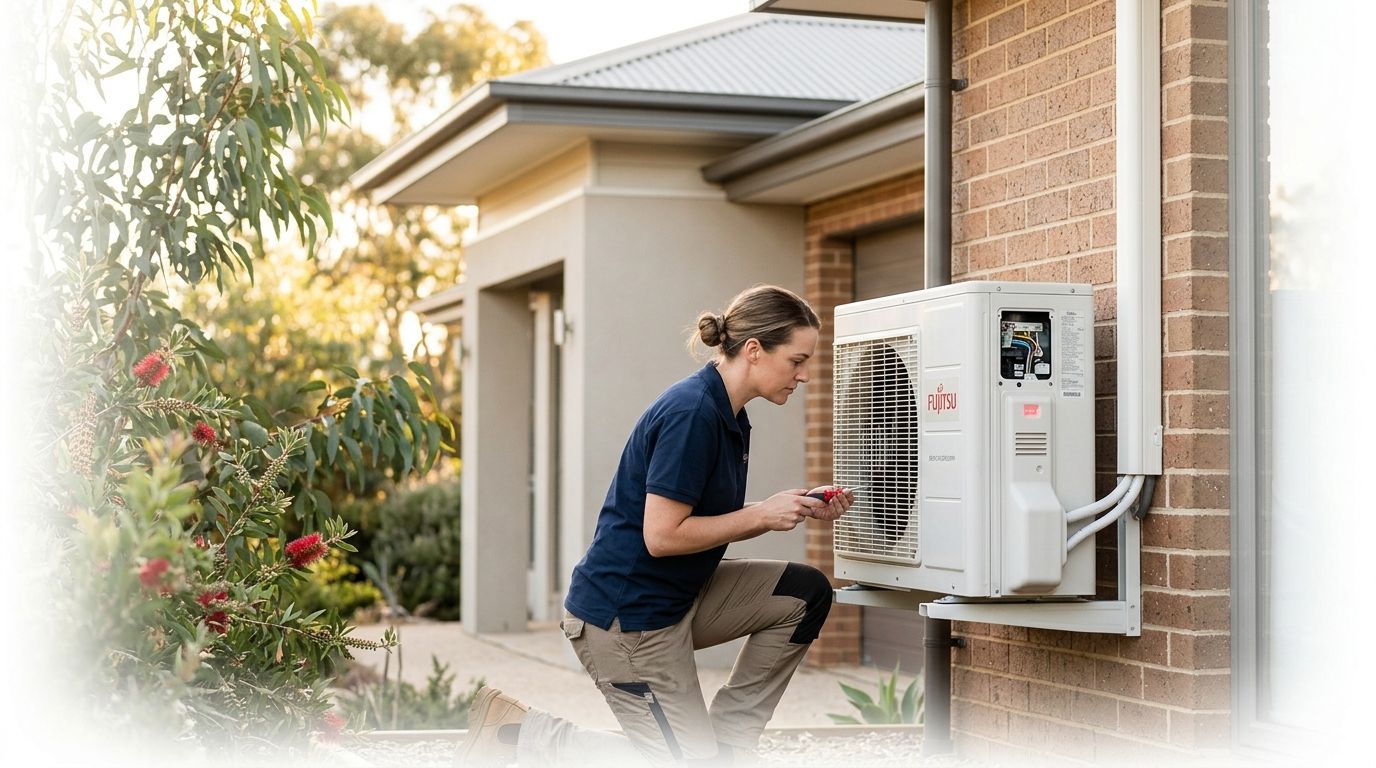
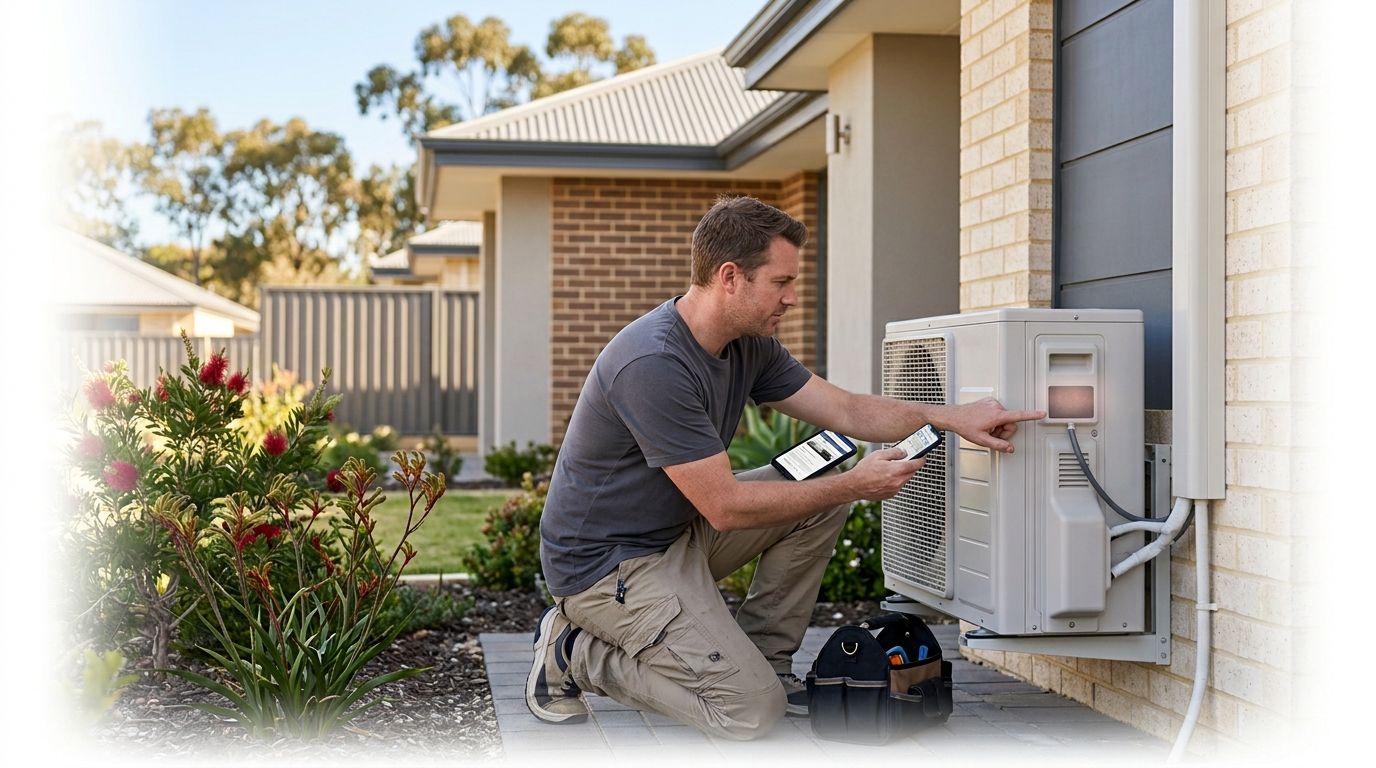
- Install the outdoor condenser unit. The outdoor unit is mounted on a concrete pad or wall brackets in a well-ventilated location, clear of fences, garden beds and direct sun where possible. Correct placement protects the unit from debris and ensures adequate airflow around the condenser coil for efficient operation.
- Run refrigerant lines and electrical cabling. Insulated copper refrigerant lines are run between the indoor and outdoor units, along with the electrical cabling needed to power both. These are typically chased through walls or run in conduit along the exterior of the home, then neatly terminated at each unit.
- Connect the control wiring and zone controller. The zone controller or smart controller is wired in and connected to the motorised dampers in each duct zone. This is what allows you to independently control which rooms receive conditioned air and to set different temperatures or schedules for different areas of the home.
- Pressure-test and vacuum the refrigerant lines. Before any refrigerant is introduced, the lines are pressure-tested with nitrogen to check for leaks, then vacuumed down to remove moisture and non-condensable gases. Charging the system with refrigerant must be performed by a technician holding an ARC licence. Handling refrigerant without this licence is illegal under Australian law, and no reputable installer will skip this step.
- Commission the system, test all zones and hand over. With refrigerant charged, the technician powers up the system and runs through each zone to verify airflow, temperature delivery and zone control operation. Any balancing adjustments are made at this stage. You'll receive a walkthrough of the controller and a copy of the commissioning report before the team packs up.
Most residential installations are completed in one to two days for a straightforward single-storey home, and up to three days for larger or more complex properties. The ductwork stage is usually where extra time is needed if the roof space is tight or the layout is awkward.
What Makes Ducted Installation More Complex Than a Split System?
Ducted air conditioning installation is significantly more involved than a standard split system install, and that complexity is reflected in the cost. A split system typically takes a qualified technician two to four hours to install. A ducted system takes one to three days and often involves multiple trades working across different parts of the home at the same time.
The table below outlines the key differences between the two installation types:
| Factor | Ducted System | Split System |
|---|---|---|
| Installation time | 1 to 3 days | 2 to 4 hours |
| Roof space required | Yes, for air handler and ductwork | No |
| Ductwork routing | Required through ceiling cavities | Not required |
| Electrical requirements | Dedicated circuit, sometimes three-phase | Standard single-phase circuit |
| Council or strata approval | Occasionally required | Rarely required |
| Trades involved | HVAC technician, electrician, sometimes builder | HVAC technician only |
Roof space access is one of the biggest variables. A single-storey home with a shallow ceiling cavity can make duct routing genuinely difficult, requiring the installer to work in tight, hot conditions and sometimes take longer routes to avoid structural obstacles. Two-storey homes add another layer of complexity, as ductwork often needs to be run through internal walls or floor cavities to reach upper-level rooms.
Electrical upgrades are another common cost that catches homeowners off guard. Larger ducted systems, particularly those above 14kW, may require a dedicated circuit or even three-phase power, which means bringing in a licensed electrician to upgrade the switchboard before installation can proceed. If your home is in a strata complex or subject to council restrictions on outdoor unit placement, you may also need to obtain approval before work begins.
None of this should put you off a ducted system if it's the right fit for your home. It simply means the upfront investment is higher than a split system. For a realistic sense of the price difference, our guide to split system air conditioning costs gives a useful reference point before you start comparing quotes.
Ready to Install a Ducted System? Here's How to Get Started
Ducted air conditioning installation is a professional, multi-step job that delivers whole-home comfort when it's designed and installed correctly. The two decisions that matter most are choosing the right system capacity for your home and finding a qualified, experienced installer. Get those two things right and everything else follows.
Before you request an installation quote, it's worth comparing brands and price points so you know what to expect. At the more affordable end, the Samsung 10kW Duct S2+ Inverter Ducted Air Conditioner (Three Phase) comes in at $3,320. For larger homes that need more output, the Daikin 14kW Premium Inverter Ducted Air Conditioner (FDYA140AV19) is priced at $6,363. There's a wide range in between, and browsing before you talk to an installer means you'll have a much more informed conversation about what suits your budget and your home.
Browse the full ducted air conditioner range at AusAir to compare brands, capacities and pricing before you get your first quote.
Frequently Asked Questions
Can I install a ducted air conditioner myself?
No. Ducted air conditioning installation must be carried out by a licensed HVAC technician, and the refrigerant work specifically requires an ARC (Australian Refrigeration Council) licence. Attempting to install or commission a ducted system without the appropriate licences is illegal under Australian law and will void your product warranty. Always use a qualified, licensed installer.
How long does it take to install a ducted air conditioner?
Most residential ducted air conditioning installations take one to three days to complete. A straightforward single-storey home with good roof space access is typically done in one to two days, while larger or more complex properties, including two-storey homes or those with tight ceiling cavities, can take up to three days. The ductwork routing stage is usually where extra time is needed.
How much does ducted air conditioning installation cost in Australia?
Installation costs vary significantly depending on the size of your home, the number of zones, roof space accessibility and your location. As a general guide, installation labour for a ducted system typically ranges from $3,000 to $6,000 or more on top of the unit cost. Electrical upgrades, switchboard work or difficult roof access can add to that figure, so always get at least two or three itemised quotes before committing.
What size ducted air conditioner do I need?
The right capacity depends on your home's floor area, insulation, ceiling height, climate zone and window area. As a rough starting point, a home of 150 to 250 square metres typically suits a 10 to 14kW system, while homes above 300 square metres may need 16kW or more. A qualified technician will calculate this precisely using a heat load assessment, which is the only reliable way to size a ducted system correctly.