
What Is Ducted Air Conditioning?
Ducted air conditioning is a whole-home climate control system that distributes conditioned air through a concealed network of ducts and ceiling vents, keeping every room in your home at a comfortable temperature. Unlike a wall-mounted split system that serves a single room, a ducted system runs quietly out of sight and can cool or heat your entire home from one central unit. Most modern ducted systems are reverse cycle, meaning they handle both cooling in summer and heating in winter. This article covers how a ducted system works, its main components, how zoning lets you control individual rooms, the pros and cons, and how it stacks up against split systems.
Key takeaways
- Ducted air conditioning is a whole-home system that distributes conditioned air through hidden ducts and ceiling vents.
- Zoning allows you to control which rooms receive air, reducing energy costs by conditioning only occupied spaces.
- Ducted systems cost more upfront than split systems but suit larger homes with three or more bedrooms.
The Main Components of a Ducted Air Conditioning System
A ducted air conditioning system has three core parts that work together: an outdoor unit, an indoor unit and a network of ductwork and vents. Understanding what each component does makes it much easier to compare systems, plan an installation and troubleshoot problems down the track.
Outdoor Unit
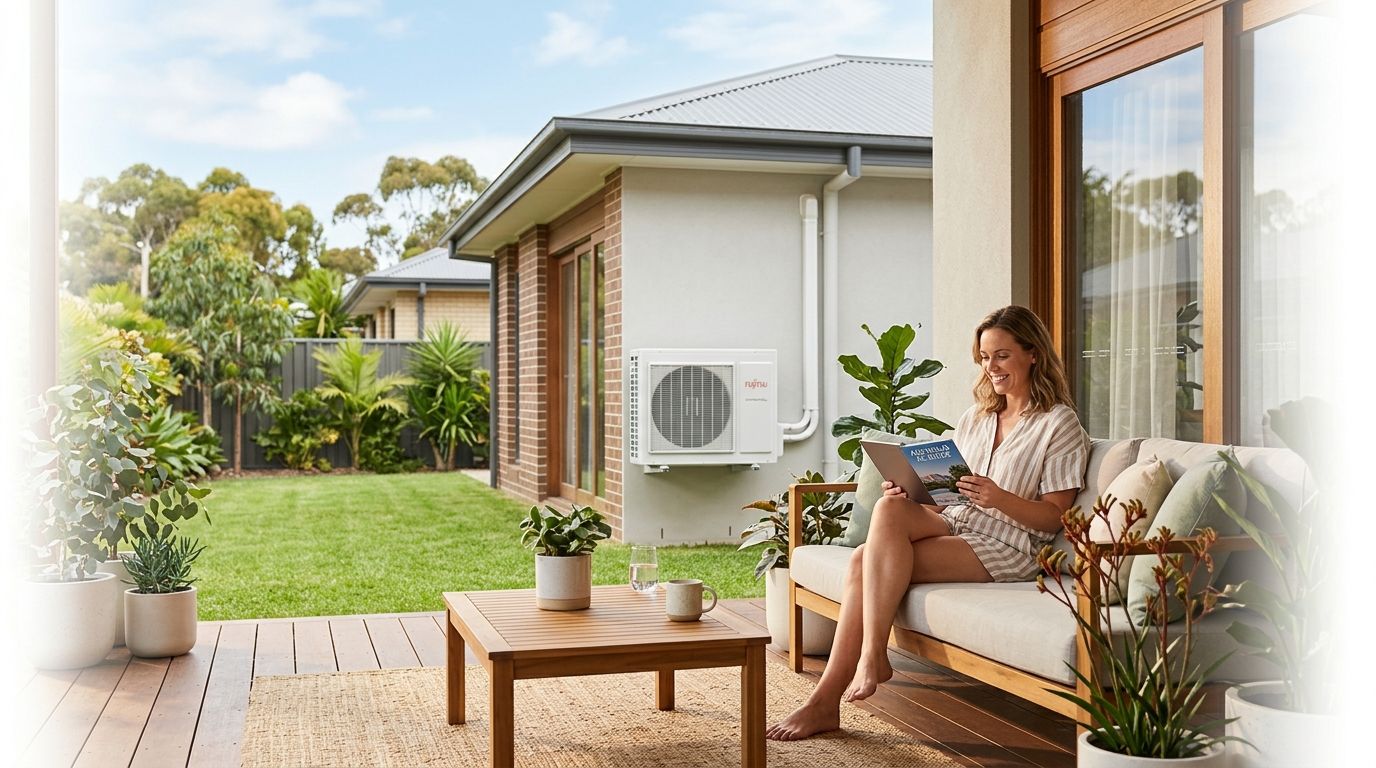
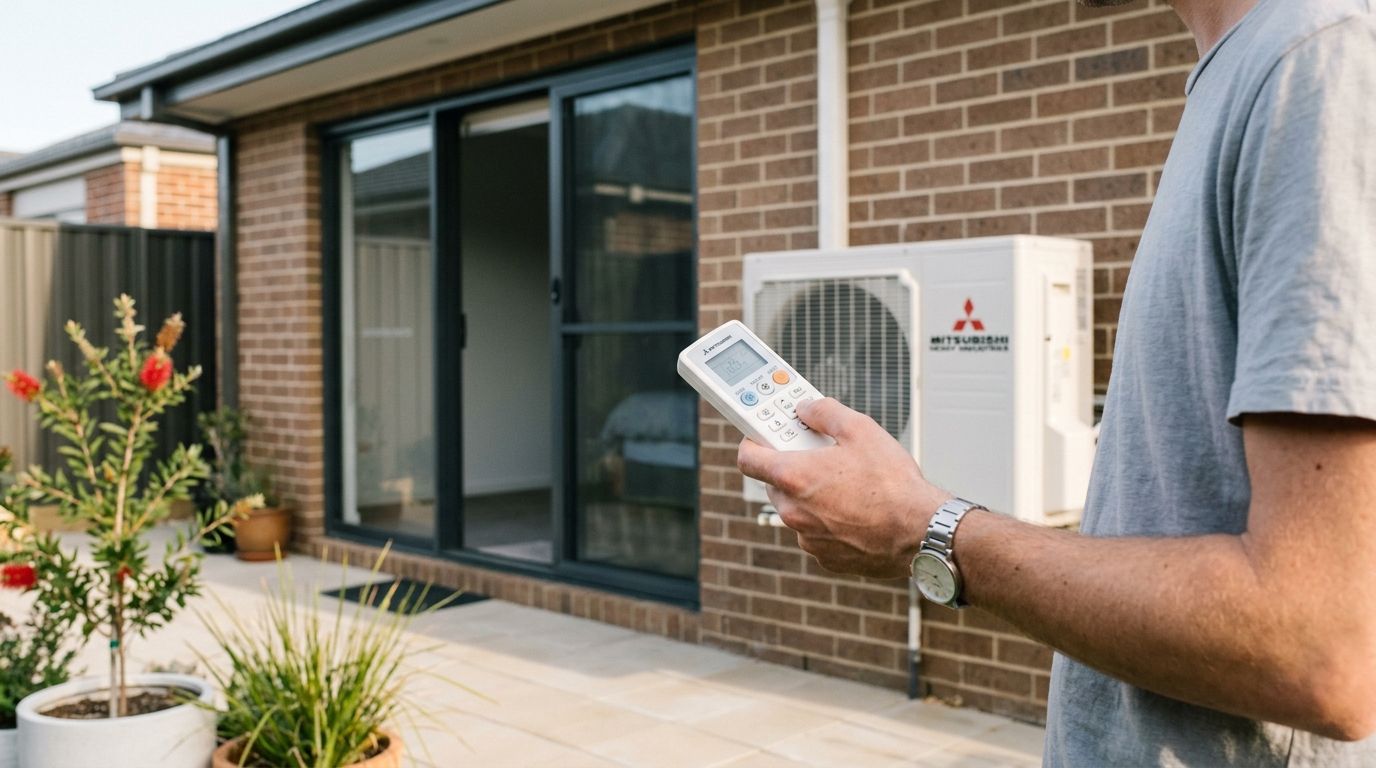
The outdoor unit is the only part of a ducted system you will actually see from outside the home. It houses the compressor and condenser coils, and it does the heavy lifting of moving heat between your home and the outside air. In cooling mode, it releases heat extracted from inside your home out into the atmosphere. In heating mode, it works in reverse, pulling heat energy from the outside air and transferring it indoors. The outdoor unit is typically installed on a concrete pad beside the house or on a rooftop, and it needs adequate clearance around it for airflow.
Indoor Unit
The indoor unit, sometimes called the air handler, is installed out of sight in your ceiling cavity or under-floor space. It contains the evaporator coil and a blower fan. Warm air from inside your home passes over the cold evaporator coil, which strips out the heat and humidity before the fan pushes the conditioned air back through the duct network. Because the indoor unit is completely hidden from view, there are no bulky wall-mounted boxes in any of your rooms. This is one of the biggest aesthetic advantages ducted systems have over wall-mounted split systems, particularly in open-plan living areas or homes with a consistent interior design.
Ductwork and Vents
The ductwork is a network of insulated channels, usually flexible or rigid tubing, that runs through your ceiling or floor cavity and connects the indoor unit to supply vents in each room. The supply vents deliver conditioned air into the room, while a return air grille (typically a single large grille in a central hallway or living area) draws warm or cool air back to the indoor unit to be reconditioned and recirculated. The quality and insulation rating of your ductwork has a direct impact on system efficiency. Poorly insulated ducts running through a hot roof cavity can bleed a significant amount of cooling capacity before the air even reaches the room, so it pays to specify quality duct insulation at installation.

How Does Ducted Air Conditioning Work?
A ducted air conditioning system works by drawing warm indoor air through a central return air grille, conditioning it via refrigerant coils inside the hidden indoor unit, then pushing the treated air back through a network of ducts and out of ceiling vents in each room. Most modern ducted systems are reverse cycle air conditioning units, meaning the same system handles both cooling in summer and heating in winter using an inverter-driven compressor that modulates its speed continuously for efficiency.
In cooling mode, warm air from inside your home passes over the cold evaporator coil inside the indoor unit. The refrigerant running through that coil absorbs the heat from the air, leaving cooled, dehumidified air behind. The fan then pushes this conditioned air through the duct network and out of the ceiling vents. Meanwhile, the refrigerant carries the absorbed heat to the outdoor unit, where the condenser coils release it into the outside air.
In heating mode, the process reverses. The outdoor unit extracts heat energy from the outside air, even on cold winter days, and transfers it indoors via the refrigerant cycle. This is why reverse cycle systems are far more energy-efficient than resistive electric heaters. Rather than generating heat from scratch, they simply move it from one place to another.
Inverter technology plays a big role in efficiency. Rather than switching the compressor fully on and off to maintain temperature, an inverter unit ramps the compressor speed up or down to match the exact heating or cooling load at any given moment. This reduces energy consumption and keeps room temperatures more stable.
Zoning: Controlling Which Rooms Get Conditioned Air
Zoning is one of the standout features of ducted air conditioning, allowing you to direct conditioned air only to the rooms that actually need it rather than conditioning your entire home at once. Motorised dampers sit inside the ductwork and open or close on command to control airflow to each zone. You manage them through a wall-mounted controller or, on newer systems, a smartphone app.
A 'zone' is typically a room or a group of rooms, and most residential ducted systems support between two and eight zones. So if the bedrooms are empty during the day, you simply close those zones and run only the living areas. This targeted approach can make a meaningful difference to your running costs over a full season.
For zone control hardware, the Mitsubishi Electric Zone Controller (8 Zones, $520) is a popular choice for larger homes that need granular room-by-room control. For Daikin systems, the Daikin Wired Backlit Controller BRC1E63 ($170) provides a clean, easy-to-read interface for managing zones and scheduling. For smart home integration and app-based control, browse our range of ducted air conditioning zone controllers for a full selection of compatible options.
Ducted Air Conditioning vs Split System: Key Differences
Choosing between a ducted system and a split system comes down to how many rooms you need to condition, your budget and how much you care about aesthetics. The table below covers the key differences across the factors that matter most to most buyers.
| Feature | Ducted System | Split System |
|---|---|---|
| Coverage | Whole home via ceiling vents in every room | Single room or open-plan area per unit |
| Upfront Cost | Higher, typically $5,000 to $15,000+ installed | Lower, typically $1,000 to $4,000 installed |
| Installation Complexity | Major, requires ductwork through ceiling or floor cavity | Simpler wall installation, usually one to two days |
| Aesthetics | Fully concealed, only small ceiling vents visible | Wall-mounted indoor unit visible in the room |
| Zoning Capability | Built-in multi-zone control across two to eight zones | Limited to the one room each unit serves |
| Running Cost | Efficient for whole-home conditioning with zoning active | Very efficient for single rooms, less so for whole homes |
| Best Suited For | Larger homes, new builds and major renovations | Apartments, single rooms and rental properties |
The core takeaway is straightforward: ducted air conditioning makes the most sense for larger homes where whole-home comfort is the goal and the installation cost can be spread across many rooms. If you only need to condition one or two rooms, a split system air conditioners setup will almost always be more cost-effective upfront and simpler to install. For a deeper look at how the two technologies compare on efficiency and running costs, our guide to reverse cycle air conditioning vs split system covers the numbers in detail.
Is Ducted Air Conditioning Right for Your Home?
Ducted air conditioning suits larger homes where whole-home comfort is the goal, but it is not the right fit for every situation. The key factors to weigh up are your home's size and layout, whether you are building new or retrofitting, your budget and how much you care about interior aesthetics. Getting these four things right will tell you quickly whether ducted is worth the investment for your specific home.
Home Size and Layout
Ducted systems make the most sense for homes with three or more bedrooms, or open-plan living areas that would otherwise need multiple split systems to cover properly. If you are already pricing up two or three split systems to cover the main living zones, the cost gap between that approach and a single ducted system narrows considerably. A ducted system also gives you a cleaner, more consistent result across the whole home rather than a mix of wall-mounted units in different rooms.
New Builds vs Retrofits
Installing ducted air conditioning during construction is significantly easier and cheaper than retrofitting it into an existing home. During a new build, ductwork is planned into the ceiling cavity from the start, trades can coordinate efficiently and there is no disruption to finished walls or ceilings. Retrofitting into an existing home requires adequate ceiling cavity access throughout, and the additional labour involved in routing ducts around existing structures adds to the installation cost. It is still very much doable in most homes, but it pays to get a site inspection from a qualified installer before committing.
Budget
Ducted systems carry a higher upfront cost than split systems, but the unit prices are more accessible than many buyers expect. The Mitsubishi Electric 5kW Inverter Ducted Air Conditioner PEAD-M50JAA starts at $2,140, making it a realistic entry point for smaller homes or those on a tighter budget. For a medium-sized home, the Mitsubishi Electric 7.1kW Inverter Ducted Air Conditioner PEAD-M71JAA ($2,770) and the Daikin 10kW Premium Inverter Ducted Air Conditioner FDYA100AV19 ($4,746) represent solid mid-range options from two of Australia's most trusted brands. Add installation labour, ductwork and zoning hardware on top of the unit price, and total installed costs typically land between $5,000 and $15,000 depending on home size and complexity. For a full breakdown of what to budget, the ducted air conditioning cost guide covers installed pricing in detail.
Aesthetics
If a clean, uncluttered interior is a priority, ducted is the clear winner. The only visible hardware inside your home is a series of small ceiling vents and a slim wall controller. There are no bulky indoor units mounted on walls in the bedroom, living room or kitchen. For homeowners who have invested in a considered interior design, or who simply prefer a tidy finish, this alone is often the deciding factor.
Ready to compare models and pricing? Browse our full range of ducted air conditioners to find the right system for your home.
Frequently Asked Questions About Ducted Air Conditioning
How long does ducted air conditioning last?
A well-maintained ducted air conditioning system typically lasts between 15 and 20 years. The outdoor compressor unit tends to be the first component to show wear, while quality ductwork can last the life of the home if it is properly insulated and sealed. Regular servicing every one to two years will extend the system's lifespan and keep it running efficiently.
Can ducted air conditioning heat as well as cool?
Yes. Most modern ducted systems are reverse cycle, meaning they use the same refrigerant cycle to both cool in summer and heat in winter. Reverse cycle ducted systems are far more energy-efficient for heating than gas ducted heaters or resistive electric heaters because they move heat rather than generate it. A single system handles year-round climate control throughout the whole home.
How much does it cost to run ducted air conditioning?
Running costs depend on the system's capacity, your local electricity tariff and how actively you use zoning to limit conditioning to occupied rooms. A 10kW ducted system running at full load draws roughly 3 to 4kW of electricity per hour, which at average Australian electricity rates works out to around $1.00 to $1.30 per hour. Using zoning to run only two or three zones rather than the whole home can cut that figure significantly over a full season.
Is ducted air conditioning worth it?
For larger homes with three or more bedrooms, ducted air conditioning is generally worth the upfront investment. It delivers consistent whole-home comfort, keeps the interior free of wall-mounted units and adds genuine value to the property. For smaller homes or apartments where only one or two rooms need conditioning, a split system will almost always be more cost-effective.
Ready to Cool (or Heat) Your Whole Home?
Ducted air conditioning is a whole-home climate control solution that distributes conditioned air through a concealed duct network, giving you zoning flexibility and a clean interior finish that multiple split systems simply cannot match. It is a bigger upfront investment than a room-by-room approach, but for larger homes that investment pays off in consistent comfort, a clutter-free aesthetic and real property value. For homes with three or more bedrooms, it is hard to argue against.
Browse the full range of ducted air conditioners at AusAir Conditioners for competitive prices on Daikin, Mitsubishi Electric, Samsung and more. Whether you are planning a new build or retrofitting an existing home, there is a system to suit your floor plan and budget.