
AC Ventilation and the Split System: What's Actually Happening?
A standard split system air conditioner does not bring in fresh air from outside. This is one of the most common misconceptions about ac ventilation in Australian homes. The indoor unit draws the air already inside your room, conditions it by heating or cooling it, and blows it straight back into the same space. No outdoor air enters the building through the system itself.
The confusion is understandable. You can see the outdoor unit sitting on the wall or ground outside, the system clearly does something with the outside world, so it feels logical that fresh air must be coming in. It isn't. The outdoor unit handles heat exchange, not air exchange.
This article explains exactly how a split system moves air, why ventilation still matters even when your system is running, and what practical steps you can take to keep the air in your home fresh and healthy.
Key takeaways
- Split systems recirculate indoor air and do not provide ac ventilation or fresh air intake by default.
- Ventilation and air conditioning are separate functions that work best together.
- Opening windows, using exhaust fans or installing a heat recovery ventilator improves indoor air quality.
How a Split System Actually Moves Air
A split system operates as a closed loop. The indoor unit pulls room air in through a return grille, passes it across the evaporator coil where heat is either absorbed or released depending on the mode, and then pushes that same conditioned air back into the room through the outlet louvres. The air never leaves the building. It simply gets cooler, warmer or drier before returning to the space.
The refrigerant lines running through the small pipe penetration in your wall carry compressed refrigerant gas between the indoor and outdoor units. That hole in the wall also accommodates the condensate drain, which removes moisture extracted from the air during cooling. Neither of these carries air in any direction. If you want a deeper look at how air conditioning works, our guide covers the full refrigerant cycle in plain terms.
Most indoor units also draw room air through a washable filter before it reaches the coil. This filter captures dust, pet hair and larger airborne particles, which is genuinely useful for air quality. What it does not do is introduce any fresh outdoor air into the mix. The filter cleans the air that is already in the room, nothing more.
What the Outdoor Unit Actually Does
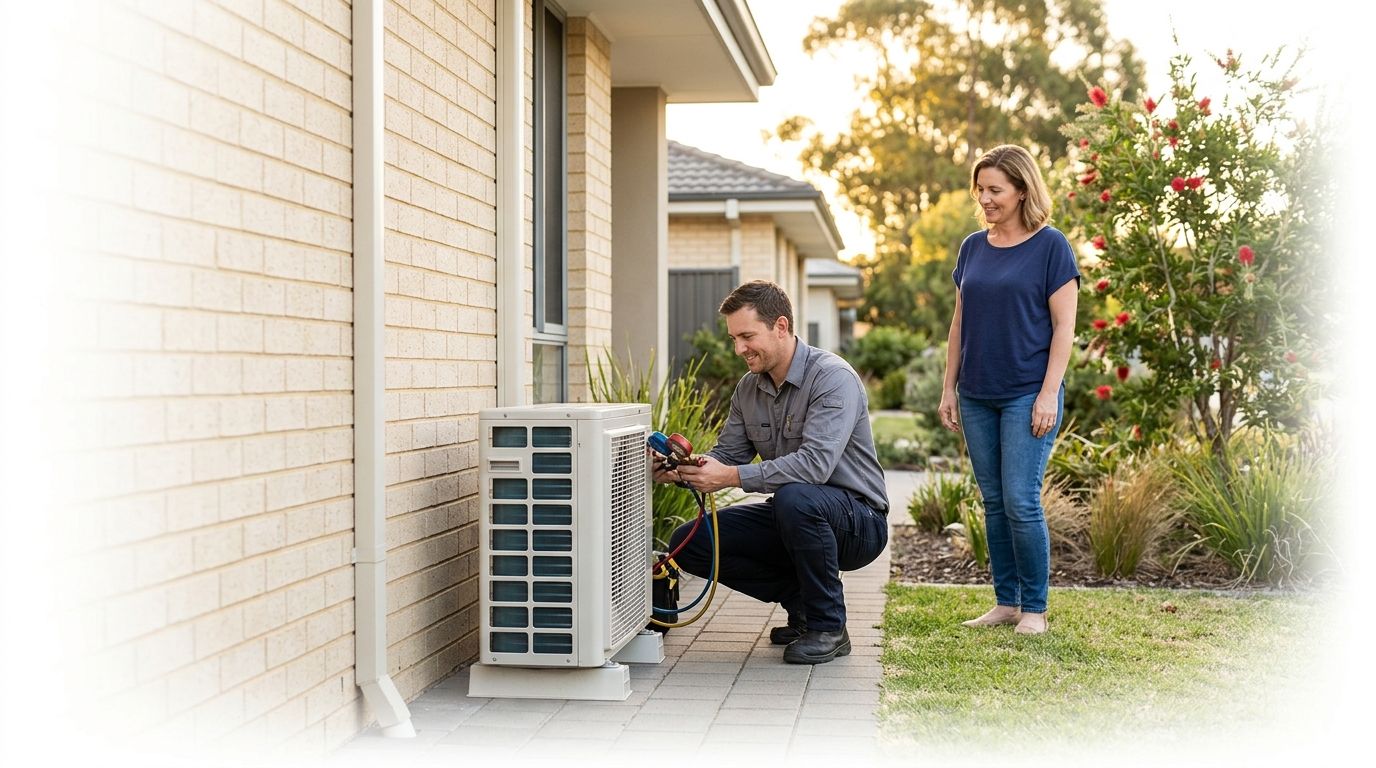
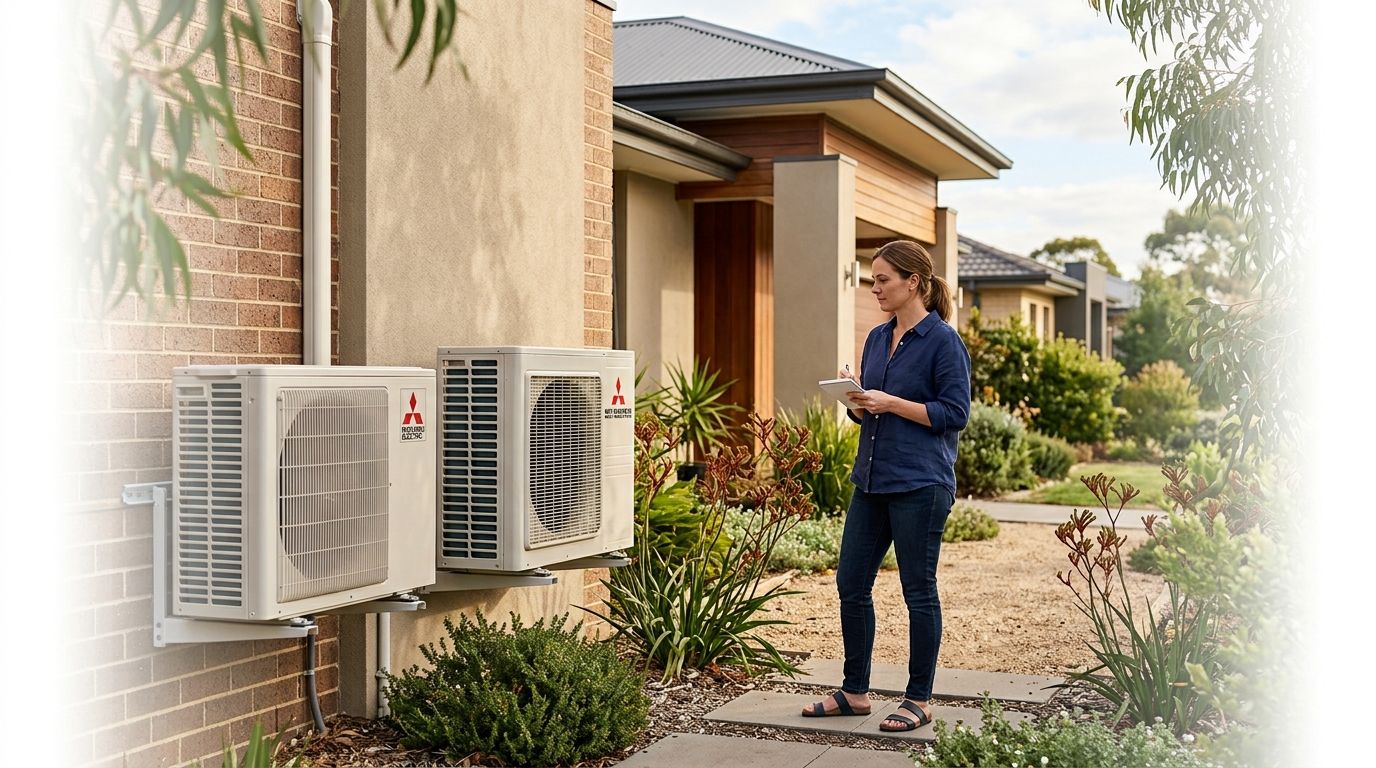
The outdoor unit contains the compressor and the condenser coil. Its fan pulls in ambient outdoor air and blows it across the condenser coil to either release heat (in cooling mode) or absorb heat (in heating mode). That outdoor air is used purely as a heat sink or heat source. It flows through the outdoor unit and back out into the garden or street. It never enters the refrigerant circuit and it never reaches the indoor unit.
Think of it this way: the outdoor unit is doing the same job as the radiator on a car. Air passes over it to manage temperature, but that air does not end up inside the cabin. The same principle applies here. The outdoor fan is working hard, but all it is doing is helping the refrigerant do its job more efficiently. No fresh air is being pumped into your home.
Does the 'Fresh Air' Mode on Some Units Change This?
A small number of premium split systems can be fitted with an optional fresh-air intake kit by a licensed installer. Certain Daikin and Mitsubishi Electric models support this kind of accessory, which creates a controlled pathway for a measured volume of outdoor air to enter the indoor unit and mix with recirculated room air. This is a genuine fresh-air function, but it is an add-on, not a standard feature of any split system sold in Australia.
The Daikin 3.5kW ALIRA X (FTXM35AVMA, $1,447) is an example of a premium inverter split system where optional ventilation accessories may be available through your installer. Even on a unit like this, the fresh-air kit must be specified at installation time and fitted by a professional. It does not come pre-installed, and the vast majority of split systems in Australian homes are running without it. If fresh-air intake is a priority for your household, ask your installer specifically about this option before the job is booked.

Why AC Ventilation Still Matters Even Without Fresh Air
Because a split system recirculates the same indoor air continuously, the air quality inside a sealed room gradually deteriorates the longer the system runs without any fresh-air exchange. Carbon dioxide from breathing builds up, humidity can swing in either direction, household odours linger, and volatile organic compounds (VOCs) from furniture, cleaning products and cooking accumulate. The system conditions the air beautifully, but it cannot dilute what is already in it.
This issue is more pronounced in modern Australian homes than it was a generation ago. Newer builds are designed to be airtight for energy efficiency, which is great for your power bill but means there is far less natural air leakage to flush out stale air. A well-sealed home with a split system running all day can see CO2 levels climb well above the 1,000 parts per million threshold that starts to affect concentration and comfort.
The built-in filter on your split system does help with airborne particles. Units like the Daikin 3.5kW Cora (FTXV35WVMA, $1,287) and the Fujitsu 3.5kW Lifestyle (ASTG12KMTC, $1,208) both feature multi-stage filtration that captures dust, pollen and some bacteria, which is a genuine benefit for allergy sufferers. But filtration and ventilation are two different things. A filter cleans the air that is already in the room. It cannot reduce CO2 levels or remove VOCs that the filter media is not designed to capture. Browse our range of split system air conditioners to compare models with advanced filtration across brands and capacities.
The practical takeaway is that air conditioning and ventilation need to work together. Your split system handles temperature and humidity control. Ventilation, whether from opening windows, running exhaust fans or installing a dedicated fresh-air system, handles the job of replacing stale indoor air with fresh outdoor air. Treating them as separate requirements is the key to genuinely healthy indoor air quality.
Signs Your Home Needs Better Ventilation
If any of the following sound familiar, your home is likely under-ventilated regardless of how well your split system is performing:
- Stuffy or stale air even when the AC has been running for an hour or more
- Condensation on windows in the morning, which points to excess indoor humidity overnight
- Persistent odours from cooking, pets or cleaning products that the AC cannot shift
- Allergy or asthma flare-ups indoors, particularly if the filter has not been cleaned recently
- Headaches or difficulty concentrating in rooms that are occupied for long periods with the windows closed
- The AC struggling to maintain the set temperature despite running continuously, which can indicate restricted airflow from a clogged filter or poor air circulation overall
How to Improve AC Ventilation in Your Home
Improving air quality alongside your split system does not require a major renovation. There are four practical strategies Australian homeowners can use, ranging from free habits to purpose-built equipment, and most homes will benefit from combining at least two of them.
1. Open windows and doors periodically to flush stale air. The simplest approach is also the most effective for CO2 and VOC removal. Opening windows for 10 to 15 minutes in the morning, before the day heats up, allows fresh outdoor air to displace the stale air that has built up overnight. Turn the split system off or switch it to fan-only mode during this flush so you are not fighting against the airflow. In cooler months, even a brief cross-ventilation window can make a noticeable difference to how fresh the home feels.
2. Use the split system's fan-only mode. Most split systems include a fan-only setting that circulates air through the filter without activating the refrigerant cycle. This will not introduce fresh air, but it does keep air moving and passes it through the filter more frequently, which helps with particles and odours between ventilation windows. It also uses significantly less electricity than running the full cooling or heating cycle.
3. Add a dedicated ventilation fan or heat recovery ventilator (HRV). For continuous fresh-air exchange without relying on open windows, a dedicated ventilation fan is the most reliable solution. An HRV goes a step further by recovering heat from the outgoing stale air and transferring it to the incoming fresh air, so you are not losing all the energy your split system put into conditioning the room. This is particularly worthwhile in well-sealed new builds. A dedicated ventilation fan can provide continuous fresh-air exchange, so browse our ventilation fans range to find options suited to different room sizes and installation types.
4. Pair the split system with a standalone air purifier. For particle and odour control beyond what the split system's filter can manage, a dedicated air purifier adds a meaningful layer of protection. The Mitsubishi Electric Air Purifier HEPA MA-E85R-A ($999) uses a true HEPA filter to capture fine particles down to 0.3 microns, along with activated carbon filtration for odours and VOCs. It works independently of the split system, so it keeps running even when the AC is off.
One important note for Australians in bushfire-prone regions or high-pollen areas: during smoke events or peak pollen season, keeping windows closed and relying on your split system's filtration plus a standalone air purifier is the smarter approach. Flushing fresh air through the home sounds appealing, but if that outdoor air is carrying smoke particles or heavy pollen loads, you are making indoor air quality worse, not better. Check local air quality readings before opening up.
Don't Forget Your Filter
None of the strategies above will perform well if your split system's filter is clogged. A dirty filter restricts airflow through the indoor unit, which reduces the system's ability to circulate and condition air effectively. It also means the fan has to work harder, which increases energy consumption and puts extra strain on the unit. During periods of heavy use, such as a long summer or a cold winter, aim to clean the filter every four to six weeks. It takes about five minutes and makes a measurable difference to both air quality and system efficiency. For a full walkthrough, see our guide on how to clean your AC filter, including how often to clean based on your usage patterns.
Breathe Easy: Getting the Most from Your Split System
A split system air conditioner conditions and filters the air already inside your home, but it does not replace ventilation. These are two separate jobs, and the best indoor air quality comes from treating them that way. Use your split system for temperature and humidity control, and pair it with a deliberate ventilation strategy, whether that is opening windows each morning, running exhaust fans or installing a heat recovery ventilator.
Choosing a quality unit with good filtration is the right starting point. From there, clean the filter every four to six weeks during heavy use, flush fresh air through the home when outdoor conditions allow, and consider adding a standalone air purifier for an extra layer of particle and odour control.
Browse our full range of split system air conditioners to compare models across brands and capacities, or take a look at our air purifiers to find a unit that works alongside your split system for cleaner, healthier indoor air.
Frequently Asked Questions
Does a split system air conditioner bring in fresh air from outside?
No. A standard split system recirculates the air already inside your room. The indoor unit draws room air in, conditions it by heating or cooling it, and returns it to the same space. No outdoor air enters the building through the system. A small number of premium models can be fitted with an optional fresh-air intake kit by a licensed installer, but this is not a standard feature on any split system sold in Australia.
How do I get fresh air with a split system running?
The simplest method is to open windows and doors for 10 to 15 minutes each morning to flush stale air before the day heats up. For a more continuous solution, a dedicated ventilation fan or heat recovery ventilator (HRV) provides controlled fresh-air exchange without relying on open windows. Pairing either approach with your split system gives you both temperature control and genuine air renewal.
Is the air from a split system clean?
The air from a split system passes through a washable filter that captures dust, pet hair, pollen and larger airborne particles, which is a real benefit for allergy sufferers. However, the filter does not reduce CO2 levels or remove VOCs, and its effectiveness drops significantly if it is not cleaned regularly. For finer particle control, a standalone HEPA air purifier such as the Mitsubishi Electric Air Purifier HEPA MA-E85R-A ($999) adds meaningful protection beyond what the split system's built-in filter can manage.
Can a split system cause stuffy air?
Yes, it can contribute to stuffiness if the home is well-sealed and windows stay closed for extended periods. Because the system recirculates the same indoor air, CO2 from breathing and odours from cooking or cleaning products gradually build up. The split system itself is not the cause, but running it in a sealed room without any fresh-air exchange will make the air feel stale over time. Periodic ventilation solves this quickly.