
What Is Ducted Heating Gas and How Does It Work?
Ducted heating gas systems are a whole-home heating solution that uses natural gas or LPG to warm your entire house from a single central unit. A gas burner ignites inside the heater, and the heat produced passes through a heat exchanger, warming the air without exposing it to combustion gases. A fan then pushes that heated air through a network of ducts in your ceiling or underfloor, delivering warmth through vents in each room. The result is consistent, even heating across the whole house at once.
This article covers everything you need to know before buying or upgrading a gas ducted system. We will break down the key components, look at what it costs to run, weigh up the pros and cons, and compare gas ducted heating directly against electric reverse-cycle ducted systems so you can make a confident decision.
Key takeaways
- Ducted heating gas uses a central unit to deliver warm air through ceiling or underfloor ducts to every room.
- Gas ducted systems are most cost-effective in Victoria, the ACT and southern NSW where gas tariffs are lower.
- Zone control lets you heat only occupied rooms, reducing energy use and running costs.
The Key Components of a Gas Ducted Heating System
A gas ducted heating system is made up of five core components that work together to heat your home. Understanding each part helps you ask the right questions when getting quotes and makes it easier to diagnose problems down the track.
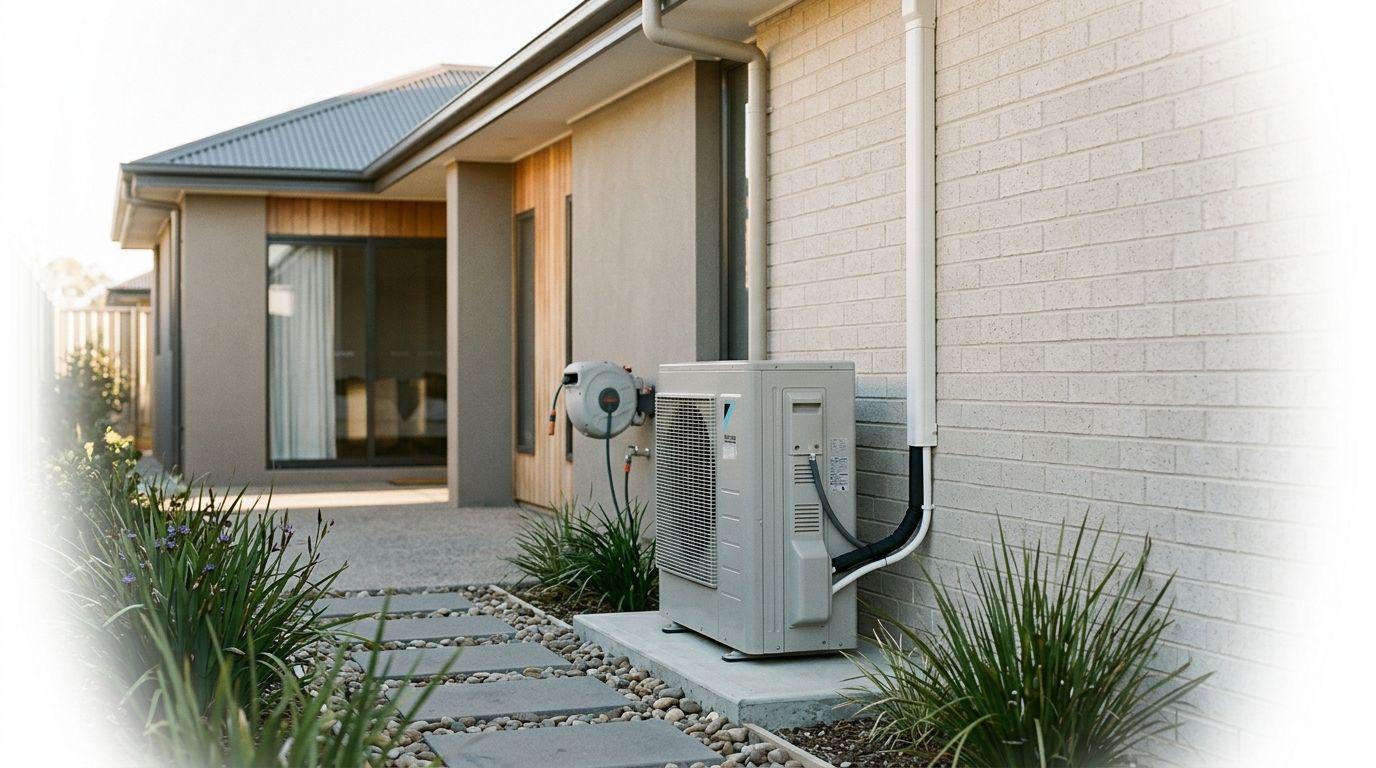
- The gas heater unit. This is the heart of the system, typically installed in the roof space or externally on a wall or ground pad. It houses the burner, heat exchanger and fan. Unit capacity is measured in kilowatts and should be sized to match your home's floor area and insulation level.
- The heat exchanger. Combustion happens inside a sealed chamber, and the heat exchanger transfers that thermal energy to the air stream without mixing flue gases into the air you breathe. A cracked heat exchanger is a serious safety issue, which is why annual servicing matters.
- The return air grille. Cold air from inside the home is drawn back into the system through a return air grille, usually located in a central hallway or living area. This completes the air circulation loop and keeps the system running efficiently.
- Ductwork and vents. Insulated flexible ducts run through the ceiling cavity (or under the floor in older homes) and connect to outlet vents in each room. Duct quality and insulation rating directly affect how much heat is lost before it reaches the room.
- The thermostat or zone controller. A wall-mounted controller lets you set your target temperature and, on zoned systems, choose which areas of the home to heat. Modern controllers can be upgraded to smart WiFi units. The Brivis Rinnai WiFi Kit Touch Smartphone App (SKU: CNTRLWIFINBW2, $358) is a popular add-on that works with compatible Brivis and Rinnai ducted heaters and evaporative systems, letting you control temperature and zones from your phone.
Zone Control: Heat Only the Rooms You Use
Zone control is one of the most practical features of a modern gas ducted heating system. Motorised dampers sit inside the ductwork at branch points, and the zone controller opens or closes them to direct airflow only to the areas you select. Bedrooms can be shut off during the day, and living areas can be closed overnight, so you are only heating the spaces that are actually occupied.
The energy saving is real and measurable. A typical four-bedroom home might only need two or three zones active at any given time, which means the heater runs for shorter periods and uses less gas. Most new gas ducted systems support at least two zones as standard, with premium models offering up to eight or more independently controlled areas. If your current system does not have zone control, it can often be retrofitted without replacing the entire heater unit.

Gas Ducted Heating vs Electric Ducted Air Conditioning: Which Should You Choose?
Gas ducted heating and electric reverse-cycle ducted air conditioning are the two most common whole-home climate systems in Australia, but they serve different needs. Gas heats powerfully and cheaply in cold climates, while electric reverse-cycle systems handle both heating and cooling in a single unit. The right choice depends on your climate zone, whether you need cooling and how your local energy tariffs stack up.
| System Type | Heating Only or Heating + Cooling | Typical Unit Cost (supply only) | Running Cost | Best Climate |
|---|---|---|---|---|
| Gas Ducted Heating | Heating only (cooling requires a separate add-on unit) | $1,500 to $3,500+ | Lower in states with cheap gas tariffs (VIC, SA, QLD) | Cold climates: Victoria, ACT, southern NSW, Tasmania |
| Electric Reverse-Cycle Ducted | Heating + cooling in one unit | $3,307 to $4,018+ (supply only) | Competitive and improving as solar offsets electricity costs | All Australian climate zones, especially mixed and hot climates |
For a full breakdown of what you can expect to pay for installation and supply, see our guide to ducted air conditioning costs in Australia.
Gas ducted heating remains the go-to choice for households in Victoria, the ACT and southern NSW where winters are long and cold, gas connections are common, and gas tariffs are lower than electricity on a per-kilowatt-hour basis. If you only need heating and your home already has a gas connection, the running cost advantage is real.
Electric reverse-cycle ducted air conditioners make more sense if you need year-round comfort, live in a mixed or hot climate, or want to future-proof against rising gas prices. The Rinnai 10kW Inverter Ducted Air Conditioner (SKU: DINLR10Z721 / DONSR10Z72, $3,307 supply only) is a solid entry-level option for homes up to around 120 square metres, while the Rinnai 14kW Inverter Ducted Air Conditioner (SKU: DINLR14Z72 / DONSR14Z72, $4,018 supply only) suits larger homes where you need more capacity. Both deliver heating and cooling from a single system, which removes the need for a separate cooling solution entirely.
As electricity tariffs shift and more households add rooftop solar, the running cost gap between gas and electric is narrowing. For new builds or homes without an existing gas connection, electric reverse-cycle ducted is increasingly the practical default.
Pros and Cons of Ducted Gas Heating
Ducted gas heating is a well-proven technology with genuine strengths, but it is not the right fit for every home. Here is an honest look at both sides before you commit to a system.
Pros
- Fast, powerful heat output. Gas burners produce heat quickly and at high capacity. A well-sized system can bring a cold house up to temperature noticeably faster than many electric alternatives, which matters on frosty winter mornings in Melbourne or Canberra.
- Consistent whole-home warmth. Because the system pushes heated air through every room simultaneously, you get even temperatures across the house rather than one warm room and cold hallways.
- Lower running costs in gas-connected states. In Victoria, South Australia and parts of Queensland, natural gas is still cheaper per kilowatt-hour than electricity for heating purposes, which keeps ongoing bills lower for heating-heavy households.
- No refrigerant required. Gas ducted heaters do not use refrigerant, which means no F-gas handling requirements and no refrigerant recharge costs over the system's life.
- Cooling can be added later. Many gas ducted systems are compatible with add-on cooling units, so you are not locked out of air conditioning forever. It does mean a second installation cost, but the option is there.
Cons
- Heating only, out of the box. A standard gas ducted heater does nothing in summer. If you want cooling, you need a separate add-on unit or a second system, which adds cost and complexity.
- Requires a gas connection. Natural gas is not available in all Australian suburbs and regions. If your property is not connected to the gas network, you would need LPG, which is significantly more expensive to run.
- Indoor air quality risks if not properly maintained. Combustion produces carbon monoxide and other byproducts. A correctly flued and regularly serviced system vents these gases safely outside, but a cracked heat exchanger or blocked flue is a genuine health hazard. Annual servicing is not optional.
- Higher upfront installation cost than a single split system. Running ductwork through a home is labour-intensive. Installation typically adds $3,000 to $6,000 or more on top of the unit cost, depending on home size and roof access.
- Older systems can be inefficient. Gas ducted heaters installed before the mid-2000s often have star ratings well below modern units. If you are comparing the running costs of an ageing system against a new one, the difference can be substantial. Our guide to the most energy-efficient air conditioners in Australia covers how to read energy ratings and what to look for when upgrading.
Is Ducted Gas Heating Right for Your Home? A Quick Checklist
Ducted gas heating suits a specific type of home well: large, cold-climate properties with an existing gas connection that need powerful whole-home heating. If your situation ticks most of the boxes below, it is likely a strong fit. If several boxes go unticked, a different system may serve you better.
- Do you have a natural gas connection? Natural gas is the most cost-effective fuel for ducted heating. If your street has gas but your property is not yet connected, connection costs are manageable. If you are in a gas-free area and would rely on LPG, the running costs rise sharply and the value case weakens considerably.
- Is your climate cold enough to justify a heating-only system? Gas ducted heating earns its keep in Victoria, the ACT, Tasmania and southern NSW where winters are long and genuinely cold. In Brisbane or Perth, where winters are mild, a heating-only system is hard to justify.
- Do you already have cooling sorted, or plan to add it separately? Gas ducted heaters do not cool. If you need air conditioning as well, factor in the cost of an add-on cooling unit or a separate system before committing.
- Is your home 200 square metres or larger? Ducted systems carry a higher installation cost than split systems, so the per-room value improves as the home gets bigger. For smaller homes, a multi-room split system setup often makes more financial sense.
- Are you in a state where gas ducted heating is the norm? Victoria, the ACT and southern NSW have the strongest installer networks, the most competitive service pricing and the best gas tariffs for this type of system.
If your home needs both heating and cooling, or if you are in a milder climate zone, a reverse-cycle ducted system or a set of split system air conditioners will likely give you better year-round value without the need for two separate systems.
Frequently Asked Questions About Ducted Gas Heating
These are the questions Australian homeowners ask most often about ducted gas heating, answered directly.
Is it worth replacing a ducted gas heater?
Yes, in most cases replacing an ageing gas ducted heater is worth it if the system is more than 15 years old or has a star rating below 4 stars. Modern high-efficiency units can use 20 to 30 per cent less gas than older models, which adds up quickly over a cold Victorian or Canberra winter. If your existing ductwork is in good condition, a straight unit replacement is far cheaper than a full system install and can pay for itself within a few years through lower gas bills.
Can ducted heating be gas?
Yes, ducted heating can absolutely be gas-powered. Gas ducted heating is in fact the most common whole-home heating system in Victoria and the ACT. A gas burner heats air inside the unit, and a fan pushes that warm air through ceiling or underfloor ducts to vents in each room. The main distinction from electric ducted systems is that gas ducted heaters provide heating only and do not cool.
Is ducted gas heating bad for asthma?
A properly maintained gas ducted heating system is generally safe for people with asthma, but there are a few things to watch. The combustion process happens inside a sealed heat exchanger, so flue gases do not enter the air stream. However, ducted systems circulate air through the home continuously, which can stir up dust and allergens if filters are not cleaned regularly. Fitting a quality return air filter and having the system serviced annually reduces this risk significantly.
Is ducted gas heating expensive to run?
Ducted gas heating is typically cheaper to run than electric resistance heating, and in states like Victoria it is often competitive with reverse-cycle electric systems during winter. Running costs depend on your gas tariff, the star rating of your unit, how well your home is insulated and how many zones you run at once. For a detailed breakdown of what different heating and cooling systems cost to run, see our guide to air conditioning costs in Australia.
The Bottom Line on Gas Ducted Heating
Gas ducted heating is a proven, powerful whole-home heating solution that works best in colder-climate Australian homes with an existing natural gas connection. It delivers fast, even warmth across large floor plans and keeps running costs manageable in states like Victoria, the ACT and southern NSW. The key trade-off is that it heats only, and it faces growing competition from efficient electric reverse-cycle ducted systems that handle both heating and cooling from a single unit.
Before committing, ask yourself three questions. Does your home have a natural gas connection? Do you live in a climate cold enough to justify a heating-only system? And do you already have cooling covered, or are you comfortable adding it separately later? If the answers point in different directions, a reverse-cycle ducted system may give you better year-round value.
Ready to compare your options? Browse the full range of ducted air conditioners at AusAir, or revisit the ducted air conditioning cost guide linked earlier in this article to work through the numbers for your home before getting quotes.