
What Does Aircon Actually Cost in Australia?
The cost of aircon in Australia spans a surprisingly wide range, from under $700 for a basic portable unit to well over $15,000 for a fully installed ducted system in a large home. Most households will land somewhere in between, and the final figure depends on three things: the unit purchase price, the cost of installation and the ongoing running costs on your electricity bill. This guide breaks down all three layers clearly, so you know exactly what to budget before you buy.
Prices vary significantly by system type and home size, so there is no single answer that fits everyone. A small apartment needs a very different solution to a four-bedroom house in Queensland. Read on and you will have a clear picture of what to expect at every level.
Key takeaways
- The cost of aircon in Australia ranges from $700 for portable units to over $15,000 for ducted systems installed.
- Installation costs add $600 to $8,000 depending on system type and home complexity.
- Running costs average $200 to $300 per summer for a typical split system.
Air Conditioner Unit Prices by System Type
Air conditioner unit prices in Australia range from around $500 for a portable unit up to $5,000 or more for a large ducted system, supply only before installation. The right system depends on your home size, whether you rent or own, and how many rooms you need to cool or heat. The table below gives a quick overview of each main system type.
| System Type | Typical Price Range (Supply Only) | Best Suited For | Key Trade-off |
|---|---|---|---|
| Portable | $500 to $900 | Renters, temporary use, single rooms | No installation needed, but less efficient and noisier than fixed systems |
| Split System | $900 to $2,000 | Single rooms or open-plan living areas in most Australian homes | Installation adds $600 to $1,500 on top of the unit price |
| Multi-Head Split | $2,500 to $6,000+ | Homes needing two to five rooms cooled from one outdoor unit | Higher upfront cost, but cheaper than installing multiple separate systems |
| Ducted | $3,000 to $8,000+ | Whole-home climate control in medium to large homes | Highest upfront cost and installation complexity, but invisible and whole-home |
Buying your unit online from a specialist retailer rather than through an installer can save you several hundred dollars on the supply price alone. Installers typically mark up the unit cost to cover their margin, whereas an online warehouse model passes those savings directly to you. You can then arrange installation separately with a licensed electrician or air conditioning technician.
Portable Air Conditioners
Portable air conditioners are the lowest-cost entry point for cooling in Australia, with most quality units sitting between $500 and $900 supply only. They require no installation at all, just plug in, vent the exhaust hose through a window or sliding door, and you are up and running. That makes them the go-to choice for renters who cannot modify their property or anyone who needs a temporary cooling solution.
The Rinnai 2.6kW Cooling Only Portable Air Conditioner RPC26MC is a solid example at $689, suited to smaller rooms up to around 20 square metres. If you need a bit more grunt for a larger bedroom or living area, the Rinnai 3.5kW RPC35MC steps up to $849 and handles rooms up to around 28 square metres.
The trade-offs are real though. Portable units are noticeably noisier than split systems because the compressor sits inside the room with you. They are also less energy efficient, meaning higher running costs over a full summer. For permanent use in an owned home, a split system will almost always be the better long-term investment.
Split System Air Conditioners
Split systems are the most popular air conditioning choice for Australian homes, and for good reason. A quality inverter split system delivers efficient, quiet heating and cooling for a single room or open-plan living area, with supply-only prices typically sitting between $900 and $2,000 for a reliable branded unit.
At the entry level, the Daikin 2.5kW ALIRA X Inverter Split System FTXM25YVMA comes in at $1,162 supply only and includes built-in WiFi for smartphone control. It is a strong choice for bedrooms or smaller living areas up to around 25 square metres. Stepping up in capacity, the Mitsubishi Electric 3.5kW AP Series Split System MSZAP35VGKD is priced at $1,229 supply only and suits medium-sized rooms and open-plan spaces up to around 35 square metres.
Both are inverter models, which means they adjust their output to maintain your set temperature rather than cycling on and off at full power. This makes a meaningful difference to your electricity bill over a full season. Keep in mind that installation is an additional cost on top of the unit price, covered in the next section of this guide.
If you are ready to compare models and capacities, browse the full range of split system air conditioners available at AusAir Conditioners to find the right fit for your room size and budget.

Air Conditioning Installation Cost in Australia
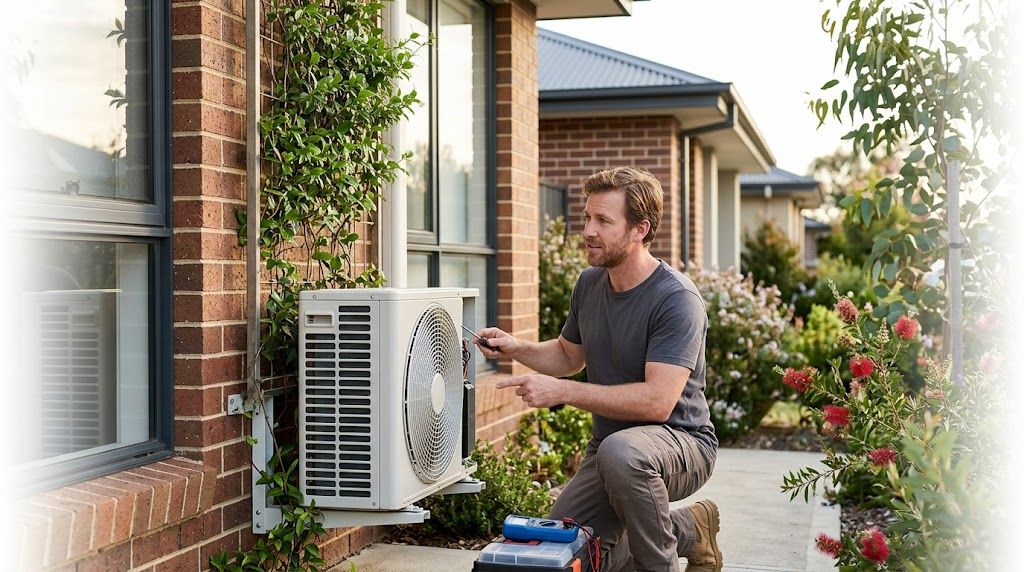
Installation costs in Australia are separate from the unit price and can add anywhere from $600 to over $8,000 depending on the system type and complexity of the job. A standard single-storey split system install typically runs between $600 and $1,500 in labour. Multi-head split systems cost more to install, usually $1,500 to $3,500 depending on how many indoor units are involved. Ducted systems are the most labour-intensive, with installation and ductwork alone often coming to $3,000 to $8,000 or more before you factor in the unit itself.
One thing that catches many buyers off guard is the legal requirement around refrigerant handling in Australia. Under the Ozone Protection and Synthetic Greenhouse Gas Management Act, only a licensed technician holding an ARCtick licence can handle refrigerants. This is not optional and applies to every fixed air conditioning installation in the country, so always confirm your installer is properly licensed before booking.
What Affects Your Installation Quote?
Five main factors will push your installation quote up or down. Understanding them before you get quotes means you will not be caught off guard by the final number.
- System type and number of units. A single split system is the simplest and cheapest install. Each additional indoor head on a multi-head system adds labour time and refrigerant pipe runs, increasing the total cost accordingly.
- Storey height and roof or wall access. Installing on a double-storey home requires scaffolding or elevated access equipment, which adds cost. Difficult wall materials like double brick also take longer to core drill through.
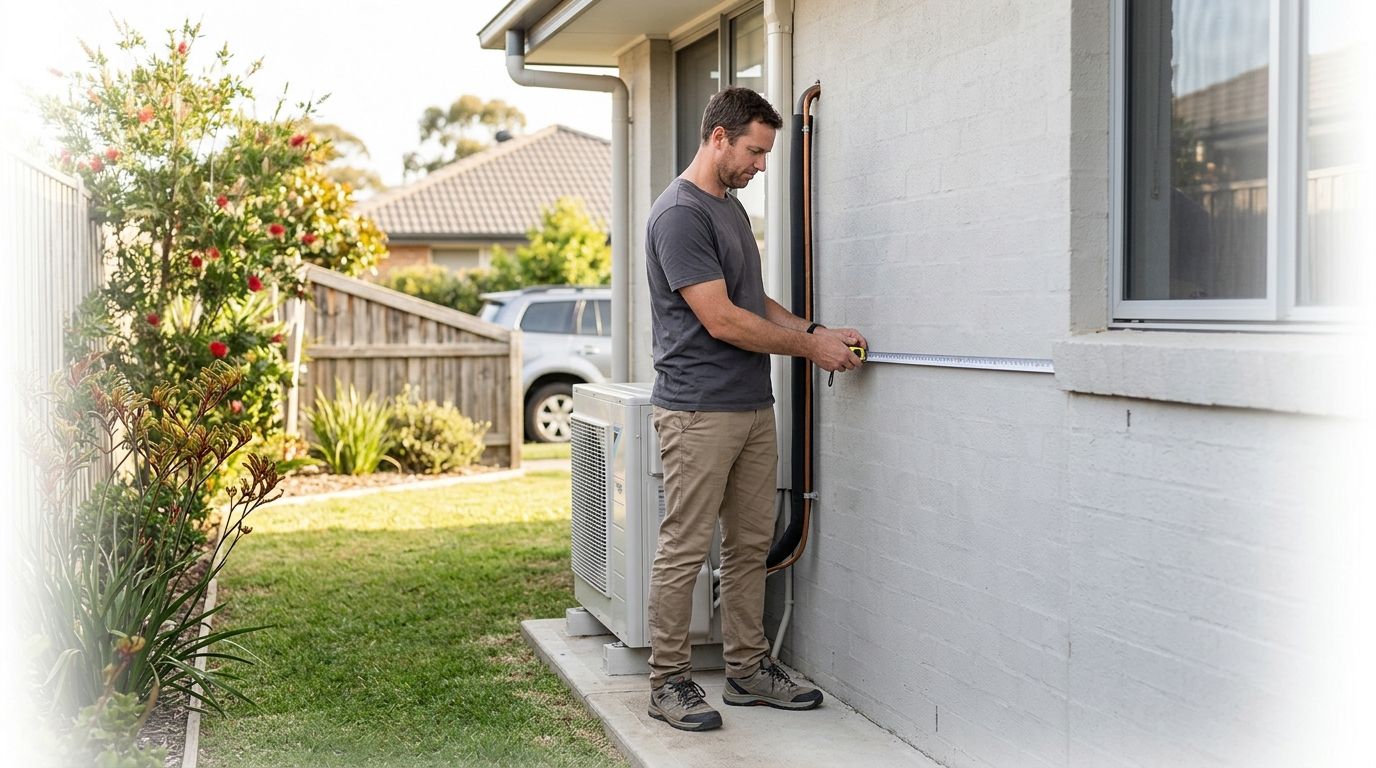
- Distance between indoor and outdoor units. The longer the pipe run between the indoor head and the outdoor compressor, the more refrigerant pipe, electrical cable and labour is required. A standard install assumes around three to five metres. Anything beyond that attracts additional charges.
- Electrical board upgrades. Older homes may need a switchboard upgrade or a new dedicated circuit to handle the load of a new system. This can add $300 to $800 or more to the total bill.
- State-based labour rates. Electrician and air conditioning technician rates vary across Australia. Expect to pay more in Sydney and Melbourne than in regional areas, and Western Australia and the Northern Territory tend to have higher trade rates than the eastern states.
For a full breakdown of what to expect at every stage of the installation process, the dedicated guide to air conditioning installation costs in Australia covers quotes, hidden costs and how to compare tradespeople.
How Much Does It Cost to Run an Air Conditioner?
Running costs depend on your system's energy efficiency, how often you use it and what you pay for electricity. In 2026, the average Australian household pays between 30 and 40 cents per kWh, though this varies by state and retailer. A 3.5kW inverter split system running eight hours a day at 35 cents per kWh costs roughly $1.00 per hour to run, which adds up to around $240 over a three-month summer. That figure assumes the system is appropriately sized for the room and running at typical efficiency.
Star ratings and inverter technology are the two biggest levers on running costs. Every additional star on the energy rating label represents roughly 10% better efficiency. Inverter models adjust their compressor speed to maintain your set temperature rather than cycling on and off at full power, which is far more efficient during the long periods of moderate demand that make up most of a typical summer day. A higher-rated inverter model might cost $200 to $400 more upfront but can pay that back within two to three cooling seasons through lower electricity bills. For a detailed look at which models deliver the best efficiency for the money, see our guide to the most energy efficient air conditioners in Australia.
Tips to Reduce Your Aircon Running Costs
Small habits make a real difference to your quarterly electricity bill. These are the most effective ones:
- Set the thermostat to 24 to 26 degrees in summer. Every degree lower increases running costs by roughly 5 to 10%. Resist the urge to blast it at 18 degrees when you first get home.
- Use timer and sleep modes. Most modern split systems let you schedule the unit to turn off after you fall asleep or to pre-cool the room before you arrive home. Both reduce unnecessary runtime.
- Clean your filters regularly. A clogged filter forces the system to work harder, using more power for the same output. A quick rinse every four to six weeks during heavy use keeps airflow where it should be.
- Seal gaps around doors and windows. Cool air escaping through gaps around door frames or poorly sealed windows means your system runs longer to maintain temperature. Draught-proofing is one of the cheapest efficiency upgrades you can make.
- Use ceiling fans to spread cool air. Running a ceiling fan alongside your split system lets you set the thermostat a degree or two higher while feeling just as comfortable. Ceiling fans use a fraction of the power of an air conditioner.
Total Cost of Aircon Ownership: What to Budget in 2026
The true cost of air conditioning in Australia is the sum of three things: the unit price, installation and ongoing running and servicing costs. Depending on your situation, total first-year ownership costs range from around $700 for a portable unit with no installation through to $20,000 or more for a fully installed ducted system in a large home. The three scenarios below give you a realistic starting point for budgeting.
| Buyer Profile | Typical Setup | Unit Cost | Installation | All-In Budget |
|---|---|---|---|---|
| Renter or small apartment | Portable unit, no installation required | $500 to $900 | $0 | $700 to $900 |
| Single-room homeowner | Inverter split system, standard install | $900 to $2,000 | $600 to $1,500 | $1,800 to $3,500 |
| Whole-home solution | Ducted system, full installation and ductwork | $3,000 to $8,000+ | $5,000 to $12,000+ | $8,000 to $20,000 |
For renters, the Rinnai 2.6kW Cooling Only Portable Air Conditioner RPC26MC at $689 is a practical all-in solution with no tradesperson required. Single-room homeowners can build a solid setup around the Daikin 2.5kW ALIRA X Inverter Split System FTXM25YVMA at $1,162 supply only, or the Mitsubishi Electric 3.5kW AP Series Split System MSZAP35VGKD at $1,229 supply only, with installation on top of either figure.
Beyond the upfront costs, factor in annual servicing. A professional service for a split system typically costs $150 to $300 per year, covering filter cleaning, coil inspection and a refrigerant check. Ducted systems cost more to service, usually $250 to $500 depending on the number of zones and the size of the system. Skipping annual servicing is a false economy as a neglected system runs less efficiently and is more likely to fail mid-summer. For a full breakdown of what a service involves and what to expect to pay, see our guide to air conditioner servicing costs in Australia.
Ready to find the right unit for your budget? Browse our best-selling air conditioners to compare models, capacities and prices, or contact our team for a personalised recommendation and supply quote.
Frequently Asked Questions About the Cost of Aircon in Australia
How much does it cost to install a split system air conditioner in Australia?
A standard single split system installation in Australia costs between $600 and $1,500 in labour, depending on your location, the complexity of the job and whether any electrical board upgrades are needed. Double-storey homes, long pipe runs or difficult wall materials like double brick will push the quote toward the higher end. Always use a licensed ARCtick-accredited technician, as handling refrigerant without the correct licence is illegal under Australian law.
How much does ducted air conditioning cost in Australia?
A fully installed ducted air conditioning system in Australia typically costs between $8,000 and $20,000 all up, covering the unit, ductwork, zone controllers and installation labour. The final figure depends on the size of your home, the number of zones and whether existing ductwork can be reused. Larger homes in Sydney or Melbourne with complex roof spaces will sit at the upper end of that range.
How much does it cost to run an air conditioner per hour in Australia?
A 3.5kW inverter split system costs roughly $0.80 to $1.20 per hour to run in Australia, based on average electricity rates of 30 to 40 cents per kWh. A less efficient non-inverter unit or a larger capacity system will cost more per hour. Over a full three-month summer running eight hours a day, that adds up to around $200 to $300 in electricity costs for a typical split system.
Is it cheaper to buy an air conditioner online or through an installer?
Buying the unit online from a specialist retailer is almost always cheaper on the supply price. Installers typically mark up the unit cost by 20 to 40% to cover their margin, whereas an online retailer passes those savings directly to you. You can then arrange installation separately with a licensed technician, giving you full transparency over both costs and the ability to compare quotes independently.