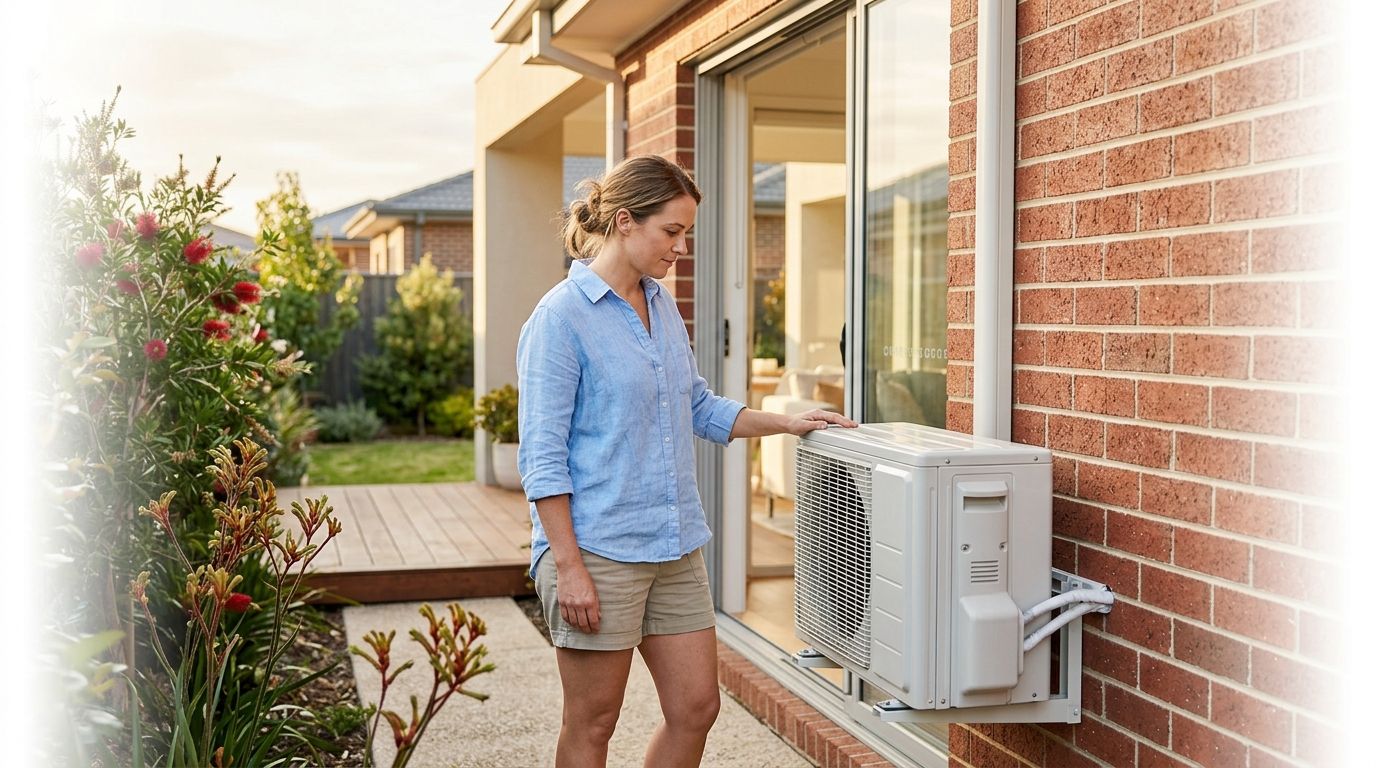

Why Your Home Takes So Long to Cool Down
You walk through the front door after a long day and the house hits you like a furnace. It's 35°C outside, the walls have been baking in direct sun for hours, and your air conditioner is about to work overtime. Knowing how to cool your home efficiently is the difference between a comfortable house in 20 minutes and still sweating an hour later. The culprit is almost always the same: running the aircon the wrong way, in the wrong rooms, at the wrong settings.
Heat builds up in a home throughout the day through windows, walls, roofing and poor ventilation. By the time you get home, you're not just cooling the air, you're fighting the thermal mass of the entire building. The good news is that a few simple habits can dramatically cut the time it takes to reach a comfortable temperature and reduce your running costs at the same time. This article covers the practical steps that actually make a difference.
Key takeaways
- How to cool your home faster by setting the thermostat correctly and using ceiling fans together with your air conditioner
- Closing doors, windows and blinds before peak heat reduces the load on your cooling system
- A correctly sized split system reaches comfortable temperatures in 15 to 30 minutes
How to Cool Your Home More Effectively: The Basics
The fastest way to cool your home is to stop fighting your air conditioner and start working with it. Most people make the same handful of mistakes that force the unit to run harder and longer than it needs to. Fix these habits first and you'll notice the difference immediately.
- Set the thermostat to 24-26°C, not 18°C. Cranking the temperature down as low as it will go does not cool the room faster. An inverter split system reaches your target temperature at roughly the same speed regardless of whether you set it to 18°C or 24°C. The difference is that 18°C keeps the compressor running flat out long after the room is comfortable. Every degree below 24°C adds roughly 10% to your running costs, so a setting of 18°C can cost you 60% more to run than 24°C for no real benefit.
- Close doors and windows to contain the cool air. Your air conditioner is sized to cool a specific volume of space. Leave the hallway door open and you're asking a bedroom unit to cool half the house. Identify the rooms you're actually using and close everything else off. This concentrates the cool air where you need it and lets the unit reach the target temperature much faster.
- Close blinds and curtains before the heat of the day. Glass is one of the biggest sources of heat gain in Australian homes. North and west-facing windows can let in enormous amounts of radiant heat through the afternoon. Closing block-out curtains or external blinds before 10am on a hot day can reduce the heat load on your aircon significantly, meaning it has less work to do when you turn it on.
- Pre-cool the home in the morning. If you know it's going to be a scorcher, run the air conditioner for an hour or two in the morning while outside temperatures are still manageable. Cooling the thermal mass of the building early, the walls, floors and furniture, means the house holds a lower base temperature through the day. This is far more efficient than trying to drag the temperature down from 38°C at 5pm.
- Use 'Cool' mode, not 'Fan only' or 'Auto'. This catches a lot of people out. 'Fan only' mode circulates air but does not activate the compressor, so it produces no actual cooling. 'Auto' mode can switch between heating and cooling depending on how the unit reads the room, which is not always what you want on a hot day. For active cooling, select 'Cool' mode directly and set your target temperature. If you want to understand exactly what each mode does and when to use it, our guide to air conditioner modes explained covers every setting in plain English.
None of these steps require a new unit or any special equipment. They're habits, and once they become routine, you'll find your home reaches a comfortable temperature noticeably faster while your electricity bill stays under control.

Use Your Fan and Air Conditioner Together
Running a ceiling fan alongside your air conditioner is one of the most effective tricks for faster home cooling, and most people never bother with it. The combination works because a ceiling fan creates a wind-chill effect that makes a room feel up to 4-5°C cooler than the actual air temperature, without changing the thermostat reading at all. That perceived cooling means you can raise your set point by 2-3°C and stay just as comfortable, which cuts running costs noticeably.
The fan's other job is distribution. A split system blows cold air from one fixed point, usually high on a wall, and that air doesn't always reach every corner of the room. Hot spots form near the floor, behind furniture and in areas the airflow can't reach directly. A ceiling fan circulates that cold air around the whole room, evening out the temperature and letting the unit reach its target setting faster.
One detail that makes a real difference: check which direction your ceiling fan is spinning. In summer, the fan should rotate counter-clockwise (anti-clockwise) when viewed from below. This pushes air straight down, creating the wind-chill effect you want. If the fan is spinning clockwise, it draws air upward and redistributes warm air that has pooled near the ceiling, which is the opposite of what you need. Most ceiling fans have a small switch on the motor housing to reverse the direction.
The practical upshot is straightforward. Set your aircon to 24-26°C, switch the ceiling fan to counter-clockwise on a medium speed, and let both run together. You'll feel the room cool down faster, and your electricity meter will thank you for not running the compressor at full tilt all afternoon.
Is Your Air Conditioner the Right Size for the Room?
Even if you follow every tip in this article, an undersized air conditioner will still struggle to cool your home quickly. Sizing is the single biggest factor in how fast and how effectively a unit can do its job. A rough starting point for Australian climates is 0.125 kW of cooling capacity per square metre of floor space, but that figure shifts depending on ceiling height, insulation quality, how much direct sun the room receives and whether the space is open-plan.
An undersized unit runs constantly, never quite reaches the set temperature and racks up a high electricity bill in the process. You'll notice the room feels stuffy even with the aircon on, and the unit never seems to switch off. An oversized unit has the opposite problem: it cools the air so quickly that it short-cycles, switching off before it has had time to remove humidity from the air. The result is a room that feels cold but clammy, which is uncomfortable in a different way.
For a bedroom or medium-sized living room up to around 35 m², the Daikin Cora 3.5kW Inverter Split System (FTXV35WVMA) at $1,256 is a well-priced and reliable entry-level option. It covers the capacity range most Australian bedrooms and smaller living areas need without overcomplicating things. If you want smartphone control and a higher-spec unit for a similar space, the Daikin ALIRA X 3.5kW Inverter Split System (FTXM35YVMA) steps up to $1,412 and includes built-in WiFi, so you can pre-cool the room before you get home. Browse the full range of split system air conditioners to compare capacities and brands side by side.
Quick Sizing Guide by Room Type
Use the table below as a starting point for matching capacity to room size. These figures assume standard ceiling heights of around 2.4 m, reasonable insulation and moderate sun exposure. Rooms with high ceilings, poor insulation or heavy west-facing sun exposure will need more capacity than the table suggests.
| Room Type | Approximate Size (m²) | Recommended Capacity (kW) |
|---|---|---|
| Bedroom | 10-20 m² | 2.0-2.5 kW |
| Living Room | 20-40 m² | 3.5-5.0 kW |
| Open-Plan Living/Kitchen | 40-60 m² | 5.0-7.1 kW |
| Large Open-Plan | 60-80 m² | 7.1-9.5 kW |
These figures are a solid starting point, but a professional assessment will always give you a more accurate result for your specific home. For a more detailed breakdown by room type, climate zone and construction style, our room-by-room sizing guide walks through the full calculation.
Other Ways to Cool Down Fast When the AC Isn't Enough
When your main air conditioner is struggling to keep up, or you're in a room without a fixed unit, a few targeted strategies can make a real difference. Blocking heat before it enters, cutting internal heat sources and using natural airflow at the right times all reduce the load on your cooling system and help the space feel more comfortable faster.
- Add a portable air conditioner for rooms without a fixed unit. Portable air conditioners require no installation and can be moved between rooms as needed, making them a practical option for renters or spaces that a split system doesn't reach. The Rinnai 3.5kW Cooling Only Portable Air Conditioner (RPC35MC) at $849 is a solid pick for a bedroom or home office. You vent the exhaust hose through a window, plug it in and it's running within minutes. The trade-off is that portable units are less efficient than split systems and can be noisy, but for flexibility they're hard to beat.
- Block radiant heat before it gets through the glass. External shading is far more effective than internal blinds because it stops heat before it enters the building. Awnings, shade cloth and outdoor roller blinds on north and west-facing windows can cut solar heat gain through glass by up to 90%. If you can only do one thing to help your aircon cope on a 40°C afternoon, shading the windows from outside is it.
- Switch off appliances that generate heat inside the home. Ovens, incandescent light globes, desktop computers and dishwashers all pump heat into the room while they're running. During peak afternoon heat, use the microwave instead of the oven, switch to LED lighting if you haven't already and shut down computers you're not actively using. These are small individual gains, but together they reduce the internal heat load your aircon has to fight.
- Use cross-ventilation in the early morning and evening. Once the outside temperature drops below the indoor temperature, usually in the early morning or after sunset, open windows on opposite sides of the home to create a through-breeze. This flushes accumulated hot air out of the building naturally, without running the compressor at all. Close everything up again before the outside temperature starts climbing to lock in the cooler air.
Frequently Asked Questions
How long should it take for an air conditioner to cool a room?
A correctly sized split system should bring a room to a comfortable temperature within 15 to 30 minutes under normal conditions. If your unit is taking significantly longer than that, the most likely causes are an undersized unit, a room that has been baking in direct sun all day, or poor sealing around doors and windows letting warm air back in. Pre-cooling the room earlier in the day makes a noticeable difference on extreme heat days.
Does setting the AC to a lower temperature cool the room faster?
No. An inverter split system reaches your target temperature at roughly the same rate whether you set it to 18°C or 24°C. Setting it lower does not speed up the cooling process. It just means the compressor keeps running flat out after the room is already comfortable, which wastes electricity. Set the thermostat to 24°C and let the unit do its job efficiently.
Should I run the fan with the air conditioner on?
Yes, running a ceiling fan alongside your air conditioner is one of the most effective ways to cool a room faster. The fan distributes cold air from the split system around the whole room and creates a wind-chill effect that makes the space feel up to 4-5°C cooler than the actual air temperature. This lets you raise the thermostat setting by 2-3°C without any loss of comfort, which cuts running costs at the same time.
Is it cheaper to leave the AC on all day or turn it off and on?
For most Australian homes, turning the air conditioner off when the house is empty and running it before you return is more cost-effective than leaving it on all day. Modern inverter units are efficient at reaching a target temperature from scratch, so the energy cost of cooling a warm room is generally lower than the cost of maintaining a cool temperature for eight or more hours. The exception is on extreme heat days where the building's thermal mass gets so hot that recovery takes a very long time. In those cases, pre-cooling in the morning and running the unit at a higher set point through the day can work out cheaper overall.
Get Your Home Cooling Faster This Summer
Cooling your home faster comes down to a handful of habits used together. Set the thermostat to 24-26°C, run a ceiling fan counter-clockwise to distribute the cold air, block heat from entering through windows before the day heats up, and make sure your unit is the right size for the room. Each of these steps makes a difference on its own, but combined they can cut the time it takes to reach a comfortable temperature by a significant margin.
Small changes to how you use your air conditioner also add up on your electricity bill. Raising the set point by just a few degrees, pre-cooling in the morning and switching off heat-generating appliances during peak afternoon heat all reduce the load on your system without sacrificing comfort.
If you're thinking about upgrading to a new unit, start by understanding how much air conditioning costs in Australia so you can budget accurately before you buy. Or browse the full range of split systems to find the right capacity for your home.