
What Is AC Dry Mode and How Does It Work?
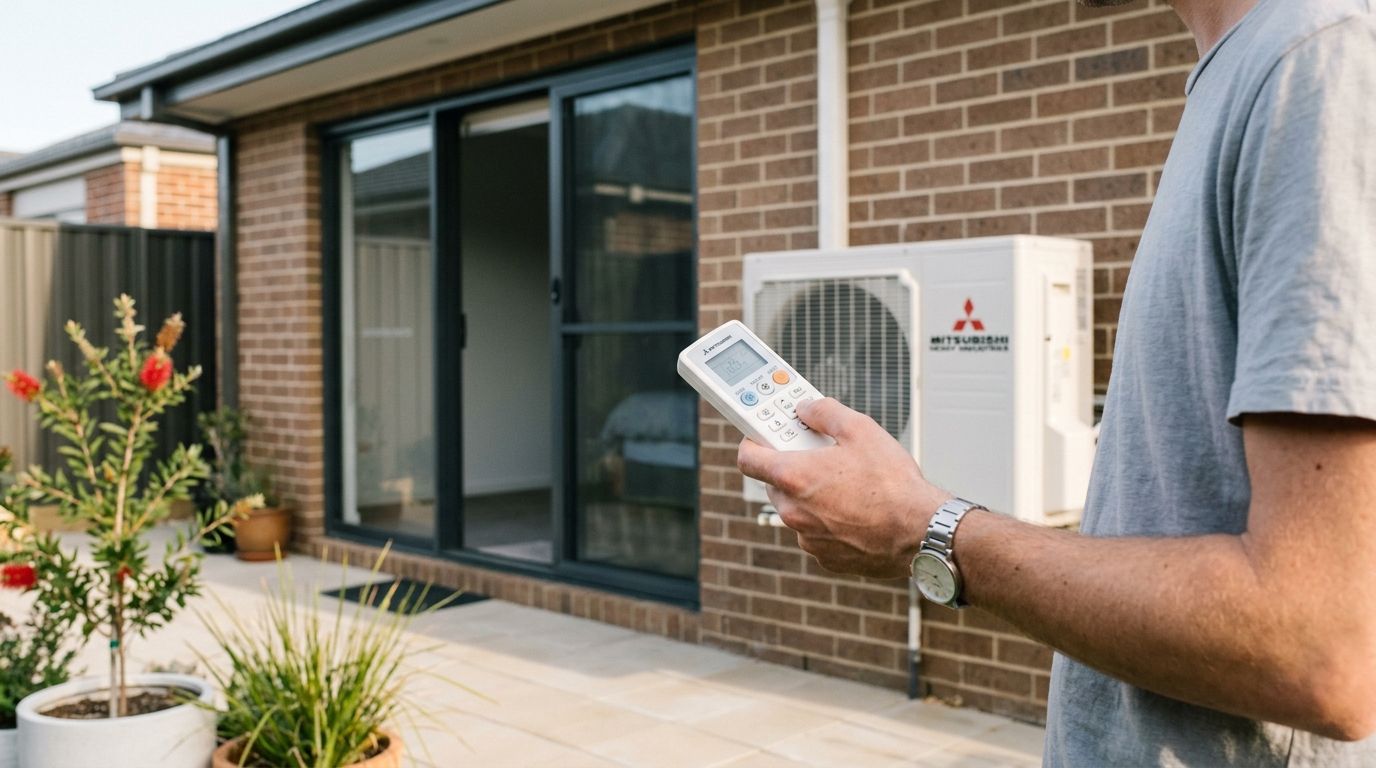
AC dry mode is a dedicated dehumidification setting built into most modern split systems and ducted air conditioners. Rather than cooling your room down aggressively, it targets the moisture in the air. The result is a space that feels more comfortable without the sharp temperature drop you get from cool mode. You will find it on the remote as a water droplet icon or the word 'Dry'.
The mechanism is straightforward. Your air conditioner chills its evaporator coil to a temperature below the dew point of the room air. As warm, humid air passes over that cold coil, moisture condenses on the surface, just like water beading on a cold glass on a summer afternoon. That condensed water drips into the drain tray and is expelled outside through the drainage line.
The key difference from cool mode is fan speed. In dry mode, the unit runs the fan at a very low speed on purpose. Slower airflow means the air spends more time in contact with the cold coil, which maximises condensation and pulls out more moisture per pass. Because the fan is barely moving, the compressor also cycles on and off rather than running flat out, so the room temperature drops only slightly rather than plummeting.
Think of it as your aircon acting more like a dehumidifier than a cooler. For a broader look at all the settings on your unit, the air conditioner modes explained guide covers cool, heat, fan, dry and auto in one place.
Key takeaways
- AC dry mode removes humidity from the air without aggressive cooling, using low fan speed and compressor cycling.
- It works best on mild, humid days between 24 and 28°C when moisture is the main comfort issue.
- Dry mode uses less energy than cool mode because the compressor cycles rather than running continuously.
Dry Mode vs Cool Mode: What's the Difference?
Dry mode and cool mode both use the same refrigeration cycle, but they are tuned for completely different jobs. Dry mode prioritises moisture removal on mild, humid days. Cool mode prioritises dropping the room temperature on hot days. Choosing the wrong one wastes energy and leaves you uncomfortable, so it is worth understanding exactly how they differ.
| Feature | Dry Mode | Cool Mode |
|---|---|---|
| Primary goal | Remove humidity from the air | Lower room temperature |
| Fan speed | Very low (fixed, not adjustable) | Variable, typically medium to high |
| Temperature effect | Minor drop of 1 to 2 degrees | Active cooling to your set temperature |
| Energy draw | Lower, compressor cycles on and off | Higher, compressor runs continuously |
| Best used when | Mild and humid (24 to 28°C, high humidity) | Hot days above 30°C |
The temperature threshold is a useful rule of thumb. On a sticky 26°C day in Brisbane or Sydney where the humidity is making everything feel clammy, dry mode will make the room feel noticeably more comfortable without overcooling the space. On a 34°C afternoon in Melbourne or Perth, dry mode simply cannot keep up. Cool mode is the right tool for that job.
One thing worth knowing is that dry mode does not let you set a target humidity level on most units. The unit runs until the room feels less muggy, but it is not as precise as a standalone dehumidifier. If you need to hold a specific humidity range, say for a home studio or a room with moisture-sensitive timber flooring, a dedicated unit will give you more control.
There is also a third option worth considering on days that are warm but not humid. Fan mode on your aircon circulates air without running the compressor at all, which uses a fraction of the energy of either dry or cool mode. It will not dehumidify or cool the room, but on a mild day it can be all you need to feel comfortable.

When Should You Use AC Dry Mode in Australia?
Dry mode is most useful on mild, humid days when the air feels sticky but the temperature is not high enough to justify blasting cool mode. In Australia, that covers a surprisingly wide range of situations, from coastal summer mornings in Sydney to the long wet season in Darwin. Here are the four scenarios where dry mode earns its place.
Mild but Muggy Days on the Coast
Brisbane, Sydney and Darwin regularly sit at 25 to 27°C in summer with humidity above 70 to 80%. At those readings, the temperature alone is not the problem. The moisture in the air is what makes you feel hot and uncomfortable. Running dry mode on these days removes that clamminess without dropping the room to an unnecessarily cold 20°C, which is exactly what cool mode would do if you set it and walked away.
During and After Rain
Extended wet periods, such as a week of overcast skies and afternoon storms in subtropical Queensland, leave indoor surfaces feeling damp and the air smelling stale. Dry mode is the right response here. It pulls the excess moisture out of the air, which helps soft furnishings, timber floors and walls dry out faster and stops that musty smell from taking hold.
Morning Pre-Cooling Before a Hot Day
Running dry mode for an hour in the early morning, before temperatures climb, removes the overnight humidity that has built up in a closed house. Starting the day with drier air means your unit does not have to work as hard when you switch to cool mode later. It is a small habit that can make a noticeable difference to how quickly the room reaches your target temperature.
Mould Prevention in Humid Climates
Mould thrives when indoor humidity sits above 60% for extended periods. Running dry mode periodically in humid months, even for an hour or two each day, keeps moisture levels in check and reduces the conditions mould needs to grow. If you already have mould appearing around your unit or on nearby walls, read the guide on mould in your aircon before it spreads further.
When NOT to Use Dry Mode
Dry mode is the wrong choice in several common situations. On very hot days above 30°C, the compressor cycling on and off cannot keep up with the heat load. Switch to cool mode and let the unit do its job properly. In dry climates, or during winter in Melbourne, Adelaide or Canberra, the air is already low in humidity and running dry mode will just make the space feel uncomfortably arid.
Some manufacturers also note in their manuals that dry mode is not designed for continuous multi-hour operation, so check your unit's documentation if you plan to run it all day. Finally, if your only goal is air movement without any temperature or humidity change, fan mode uses a fraction of the energy and is a much better fit.
Does AC Dry Mode Save Energy?
Dry mode generally uses less electricity than cool mode because the compressor cycles on and off rather than running continuously, and the fan operates at its lowest speed. On a typical humid day, dry mode can use noticeably less power than cool mode running at full tilt. That said, it is not a free mode. The compressor still runs, refrigerant still circulates, and there is a real running cost involved.
The bigger saving is indirect. On a sticky 26°C day, dry mode can make the room feel comfortable enough that you never need to switch to cool mode at all. Avoiding cool mode entirely on those borderline days is where the meaningful energy saving comes from, not just from the lower draw of dry mode itself.
Most modern split systems include dry mode as standard. The Daikin 2.5kW ALIRA X Inverter Split System (FTXM25YVMA), priced at $1,191, is a popular choice that includes dry mode alongside its inverter cooling and heating. The Daikin 2.5kW CORA Inverter Split System (FTXV25WVMA) is a more affordable alternative at $1,065 and also includes dry mode as a built-in setting. Both are solid options for households in humid coastal areas where dry mode gets regular use. You can compare the full range of split system air conditioners to find a unit that suits your home and climate.
If you want more precise humidity control, or you need to dehumidify a room in winter when running the aircon makes no sense, a standalone dehumidifier is worth considering. The Mitsubishi Electric MJ-EV38HR-A ($1,385) runs independently of your air conditioning system, so it can pull moisture out of the air without affecting room temperature at all. That makes it particularly useful in cooler months or in rooms that do not have a split system installed.
FAQ: AC Dry Mode Questions Answered
What does dry mode do on an air conditioner?
Dry mode removes excess moisture from the air without aggressively cooling the room. The unit runs its fan at a very low speed and cycles the compressor on and off, which maximises condensation on the evaporator coil and pulls humidity out of the air. Room temperature drops only slightly, usually by one to two degrees.
Is dry mode the same as a dehumidifier?
Dry mode works on the same principle as a dehumidifier but is less precise. A standalone dehumidifier lets you set a target humidity level and holds it consistently, whereas dry mode on a split system simply runs until the air feels less muggy. For general comfort on a humid day, dry mode is fine. For moisture-sensitive rooms or winter use, a dedicated dehumidifier gives you more control.
Does dry mode cool the room?
Dry mode does lower room temperature slightly, but that is a side effect rather than the goal. Expect a drop of around one to two degrees rather than the five to ten degree drop you would get from cool mode. If the room is already hot above 30°C, dry mode will not keep up. Switch to cool mode on genuinely hot days.
Can I use dry mode all day?
Most manufacturers do not recommend running dry mode continuously for many hours at a stretch. Check your unit's manual for guidance on maximum run times. In very dry conditions, extended use can strip too much moisture from the air and leave the space feeling uncomfortably arid. Short sessions of one to three hours are usually enough to bring humidity down to a comfortable level.
Ready to Get More From Your Air Conditioner?
Dry mode is one of the most underused settings on a modern split system. It is ideal for mild, humid days when the air feels sticky but the temperature does not justify full cool mode. By targeting moisture rather than temperature, it can improve comfort and trim running costs on those borderline days that make up a big chunk of the Australian summer.
If you are in the market for a new unit or want to upgrade to one with a strong inverter and a full set of modes, browse the full range of split system air conditioners to find a model that suits your home and climate. If you need standalone humidity control for a room without an aircon, or for use through the cooler months, take a look at our range of dehumidifiers for a dedicated solution.